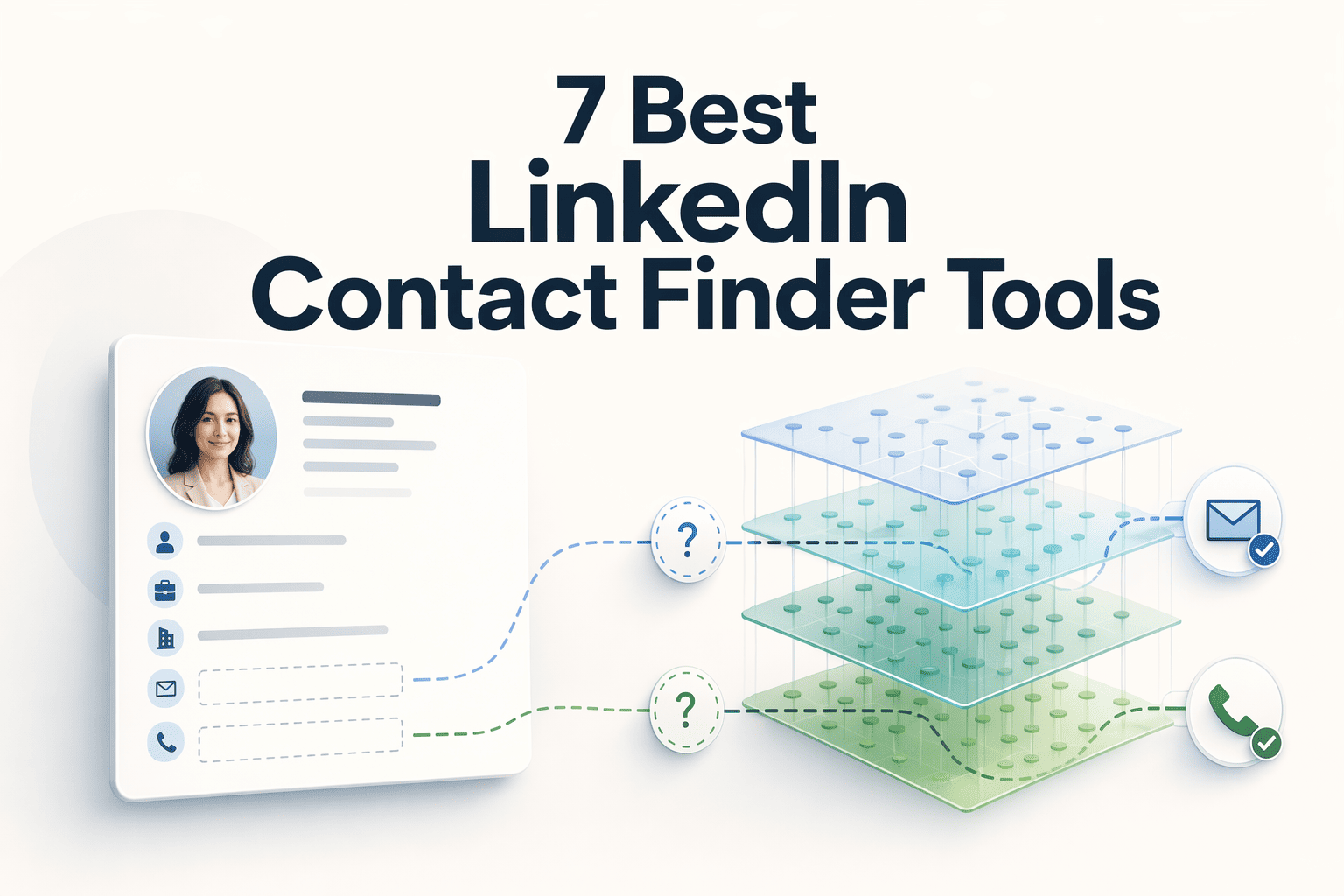
Finding both emails and phone numbers from LinkedIn profiles requires tools that query third-party databases rather than scraping LinkedIn directly—a practice that violates platform terms and risks account suspension.
This guide evaluates compliant enrichment platforms based on verification methodology, regional accuracy differences, pricing model tradeoffs, and the structural gap between advertised accuracy and usable contact rates.
Key Takeaways
- Compliant enrichment tools query external databases using LinkedIn URLs as search keys, avoiding scraping that triggers account bans
- Advertised 95% accuracy typically measures syntax validation, not deliverability—independent testing shows ~50% usable contact rates
- Phone number hit rates are structurally lower than email due to LinkedIn's 5-10% visibility floor and privacy-by-default architecture
- Global platforms deliver 20-40% lower accuracy in India versus tools with regional data partnerships and carrier-level validation APIs
- Credit-based pricing can increase real cost-per-usable-contact by 35-100% when match rates fall below 70%, compared to advertised per-credit rates
Yes — compliant enrichment platforms like Apollo, Lusha, RocketReach, and PeakAi retrieve both verified emails and phone numbers from LinkedIn profiles by querying third-party business databases rather than scraping LinkedIn directly. However, only 5–10% of LinkedIn users share phone numbers with first-degree connections, creating a structural data gap no tool can solve by accessing LinkedIn alone.
Compliant Enrichment: The Third-Party Database Workaround
Compliant tools accept a LinkedIn profile URL as input, then query independent databases aggregated from business registries, public records, and partner networks. PeakAi and similar platforms never access LinkedIn's internal APIs or scrape profile fields. The URL serves solely as a reference key to match the individual's name and company against pre-built contact repositories. This design avoids LinkedIn Terms of Service violations because the enrichment happens entirely outside LinkedIn's systems. Teams retrieve verified contacts in 10 seconds without triggering LinkedIn's automated-activity detectors.
Prohibited Scraping: Why Automated Profile Crawling Breaks LinkedIn's Terms
LinkedIn explicitly prohibits automated scraping, profile crawling, and bulk data extraction. Tools that programmatically harvest profile fields — job titles, company names, connection lists, trigger detection algorithms that suspend user accounts. Chrome extensions that parse profile DOM in real time to extract contact details operate in a gray zone; while they appear instant, they often pull data directly from prohibited sources. Platforms that crawl LinkedIn profiles directly expose users to permanent account suspension.
The Structural Phone-Number Visibility Constraint
LinkedIn does not display phone numbers by default unless users choose to share them. Only 5 to 10% of LinkedIn users expose phone numbers to first-degree connections, and even fewer to second- or third-degree connections. This design choice means no tool can extract 90%+ phone coverage directly from LinkedIn profiles alone, accuracy above platform visibility floors requires external data enrichment. Even compliant enrichment platforms rely on independent business databases to fill this gap. For context on how LinkedIn-native tools integrate with CRM workflows, see AI-powered outreach tools.
Understanding how compliant tools retrieve contact data sets the foundation for evaluating their performance claims, which often conflate multiple accuracy tiers into a single headline number.
Why Accuracy Claims Are Misleading (Email vs. Phone Separation)
Advertised 95% accuracy does not equal 95% usable contacts. Independent testing reveals that vendor claims conflate email and phone dimensions into a single metric, masking dimension-specific performance gaps. Real-world usable contact rates hover around 50%, far below marketed figures.
Verification Methodology Layers: Syntax vs. Deliverability Testing
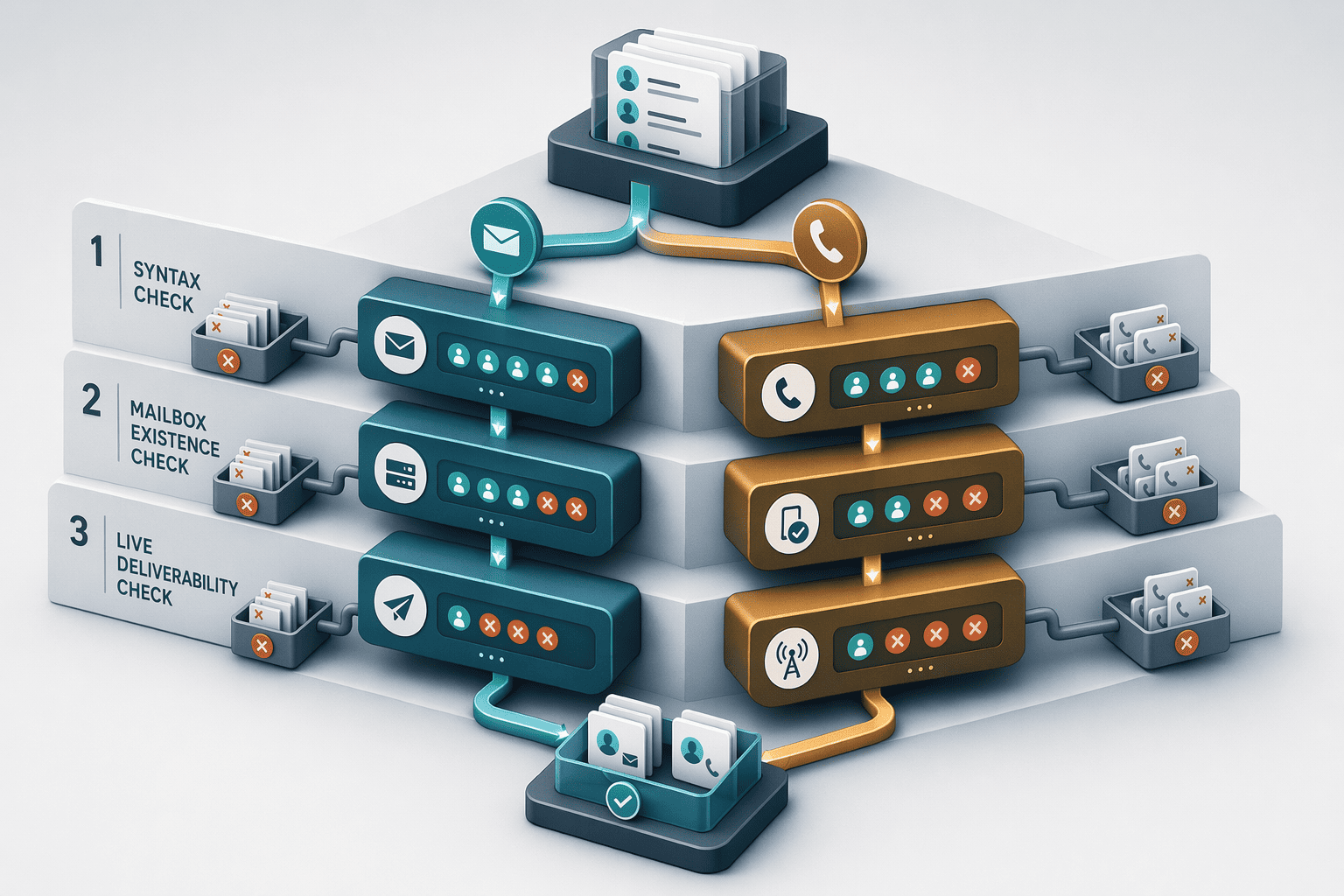
Most tools advertising 95% accuracy measure only the first tier, syntax validation, not whether emails actually reach inboxes. The three verification tiers operate at different levels of confidence:
- Syntax validation, checks email format ([email protected]) but does not confirm the mailbox exists.
- SMTP handshake, queries mail servers to verify the domain accepts mail; Hunter.io uses this method , checking SMTP servers and other signals.
- Real-time deliverability testing, sends test messages or performs catch-all detection to confirm emails reach inboxes, the layer most vendors omit.
Tools that stop at syntax or SMTP checks report high accuracy on paper but deliver low usable contact rates in production. Snov.io's multi-stage process includes syntax checks, domain validation, and SMTP checks , yet still does not guarantee inbox delivery.
Email Accuracy vs. Phone Accuracy as Separate Metrics
Vendors conflate overall accuracy with dimension-specific performance. Email hit rates may reach 85% while phone hit rates stay below 30% due to LinkedIn visibility constraints, most LinkedIn users do not expose phone numbers to second- or third-degree connections. Independent tests across multiple LinkedIn contexts reveal that email finder accuracy often varies significantly from phone discovery rates, yet vendor dashboards report a single blended figure.
This conflation hides the fact that phone numbers require different validation methods, format verification, connectivity testing, and Do Not Call registry checks, that operate independently from email deliverability pipelines.
Independent Testing vs. Vendor Claims: The 50% Reality
The gap between vendor claims (95-98%) and independent testing results (~50% usable contact rate) stems from black-box systems that obscure the methodology audit trail. Hunter.io is frequently praised for its high confidence scores , yet confidence scores measure prediction certainty, not actual deliverability. Without transparent, auditable verification pipelines, buyers cannot distinguish between tools that verify syntax only and those that perform full deliverability testing.
Buyers should demand methodology transparency: which verification tier does the accuracy claim reference, and how are email and phone dimensions weighted in the blended figure? Verify contact data before launching outreach campaigns to avoid wasted effort on syntax-validated-but-undeliverable contacts.
With the accuracy measurement gap clarified, the following platforms represent compliant options that query third-party databases for both emails and phone numbers without triggering LinkedIn's anti-scraping defenses.
Finding both emails and phone numbers from LinkedIn profiles requires enrichment tools that query independent third-party databases rather than scraping LinkedIn directly, a practice that violates LinkedIn's Terms of Service and risks account suspension. The seven platforms reviewed below combine browser extensions with database lookups to deliver dual-contact discovery, helping sales teams close more deals through verified outreach channels. Phone-number hit rates are structurally lower than email across all tools (typically 5-10% LinkedIn visibility) because LinkedIn's privacy-by-default architecture never surfaces 2FA security numbers and limits even first-degree connection access, external databases are the only source for most phone numbers.
Apollo.io: High-Volume Prospecting with Built-In Sequences
Apollo positions itself as an all-in-one sales OS with a B2B contact database of 230M+ verified professionals and companies, accessible through precision filters covering job title, location, and industry. Every contact is validated through Apollo's Enrichment product before export, and the platform integrates SMTP verification layers alongside CRM connectors for HubSpot, Salesforce, and Pipedrive. The Chrome extension overlays contact data on LinkedIn profiles, company websites, and Gmail, delivering instant lookups without tab-switching. Apollo includes built-in email sequences and unlimited email credits on select plans, making it the strongest option for teams needing email + phone + automation in one platform. Best for: High-volume sales teams running multi-touch sequences who want database search, enrichment, and outreach automation under a single subscription.
Lusha, PeakAi, RocketReach: Mid-Market Enrichment Platforms
Lusha specializes in verified direct dial phone numbers, focusing on browser-extension-first workflows that surface contact data from LinkedIn profiles and company websites. RocketReach emphasizes email accuracy at mid-market pricing, aggregating contact details across social profiles and professional networks. PeakAi delivers 91% phone accuracy by cross-referencing 200+ network data partners in real time, optimized for Indian B2B markets with GST verification and regional phone format validation. PeakAi sources verified contact data through legitimate business databases and public records rather than scraping LinkedIn directly, ensuring GDPR and CCPA compliance while delivering verified phone numbers and emails in 10 seconds. All three platforms use pay-per-contact or credit-based pricing; PeakAi starts at $9 for 50 verified contacts, positioning itself as the most cost-effective option for emerging-market prospecting. Best for: Lusha suits browser-extension-heavy workflows; PeakAi fits India-specific coverage needs with compliance-first data sourcing; RocketReach serves mid-market teams prioritizing email accuracy over phone depth.
Hunter, Cognism, SignalHire: Niche Strengths
Hunter takes an email-first approach with domain-based search and verification, letting users discover contact patterns across entire companies rather than individual profiles, ideal for account-based prospecting where you need multiple stakeholders at a target organization. Cognism focuses on GDPR-compliant phone verification for European markets, delivering mobile numbers that comply with EU data-protection frameworks. SignalHire offers a Chrome extension with pre-download confidence indicators (match quality preview before credit burn), reducing wasted credits on low-confidence lookups. Hunter provides 50 credits per month on its free plan, making it the lowest-friction entry point for testing dual-contact discovery. Best for: Hunter suits domain-driven email campaigns; Cognism fits EU-regulated sales teams needing phone-verified mobile numbers; SignalHire appeals to cost-conscious users who want credit-burn control through pre-lookup confidence scoring.
| Tool | Starting Price | Free Plan/Trial | Email + Phone | Chrome Extension | Verification Method | India Coverage |
|---|---|---|---|---|---|---|
| PeakAi | $9/50 contacts | Trial credits | Yes | Yes | 200+ network partners | Optimized |
| SignalHire | Contact sales | Trial available | Yes | Yes | Confidence scoring | General |
| Lusha | $49/mo | 5 free credits | Yes | Yes | Direct dial verification | General |
| Apollo.io | $49/mo | Yes (limited) | Yes | Yes | SMTP + enrichment API | General |
| Hunter | $49/mo | 50 credits/mo | Yes (email-first) | Yes | Domain-based + SMTP | General |
| Cognism | Contact sales | Demo only | Yes | Yes | GDPR phone verification | EU-focused |
| RocketReach | $99/mo | 5 free lookups | Yes | Yes | Social profile aggregation | General |
Join thousands of sales professionals who rely on compliant enrichment tools to find accurate contact information across LinkedIn and professional databases. PeakAi's India-optimized coverage and transparent pay-per-contact pricing make it the strongest option for emerging-market prospecting, while Apollo suits high-volume automation and Hunter serves domain-driven email campaigns. Ready to Transform Your Sales Process? Get 50 verified contacts for just $9 with PeakAi's limited-time offer, only 19 spots remaining.
Beyond choosing a compliant tool, understanding the underlying architecture determines your account safety risk when using browser extensions versus API-based enrichment.
Compliance Risk by Tool Architecture (Scraping vs. Enrichment)
Not all LinkedIn contact finders operate the same way under the hood, and the difference determines whether your account stays safe.

Enrichment Platforms: Low Risk, Lower Hit Rates
Tools like Apollo, Lusha, and PeakAi query third-party databases instead of touching LinkedIn profiles directly. You paste a LinkedIn URL; the platform cross-references that identity against business registries, public records, and partner networks. Phone-number coverage hovers around 20 to 30% because these tools can only surface what exists *outside* LinkedIn's walls. The tradeoff: zero account-suspension risk, since LinkedIn never sees automated activity on your session.
Scraping Tools: Higher Coverage, Account-Ban Risk
Gray-zone Chrome extensions parse profile DOM in real time, extracting visible phone numbers, job titles, and connection lists as you browse. Hit rates climb when prospects publicly share contact details, but LinkedIn's automation detection flags bulk extraction patterns and suspends accounts permanently. The instant-reveal promise masks the compliance cost: one algorithmic sweep can lock you out of the platform you rely on to prospect.
How to Audit a Tool's Architecture Before Committing
Ask two questions: Does the tool require LinkedIn login or profile-access permissions? If yes, it's scraping your session. Does it accept only a LinkedIn URL as input, without touching your account? Then it's querying external databases. Teams who want to close more deals without risking their LinkedIn access should default to enrichment platforms, lower coverage today beats zero access tomorrow.
Architecture alone doesn't guarantee accuracy, regional data-source partnerships determine whether a tool performs equally well across global markets or delivers geographically uneven results.
Regional Accuracy Considerations (India-Specific Coverage Gaps)
Why US/EU-Optimized Platforms Underperform in India
Global platforms built for North American and European markets deliver 20-40% lower accuracy in India because they rely on carrier-level validation APIs that are mature in Western telecom infrastructure but underdeveloped in India's prepaid-SIM-dominant market. Number portability across carriers further complicates verification, and many US/EU tools lack partnerships with Indian telecom data providers. Manual research across websites and LinkedIn can take hours, yet even after that effort, teams find outdated or incorrect data when the underlying validation layer doesn't account for India-specific number formats and portability patterns.

GST Verification and Regional Language Capabilities
Despite claiming hundreds of millions of global contacts, platforms like Apollo and ZoomInfo struggle with India-specific data sources, GST registration databases, MCA (Ministry of Corporate Affairs) filings, and regional business directories in Hindi, Tamil, and other languages. PeakAi offers India-focused contact verification with GST and MCA database integration, providing multi-language support and regional phone format validation that global tools typically omit.
Tools with India-Specific Partnerships
Tools with dedicated Indian data-provider partnerships, such as PeakAi's GST verification and coverage across 1600+ Indian cities, close more deals by delivering higher connectivity rates for phone numbers and localized firmographic data. For teams prospecting in India or emerging markets, LinkedIn tools for B2B prospecting in India and emerging markets provide a deeper dive into regional strategies and platform selection.
Regional coverage gaps combine with pricing structure to determine your true cost per usable contact, often diverging significantly from advertised per-credit or monthly subscription rates.
Pricing Models Compared (Credit-Based vs. Subscription Tradeoffs)
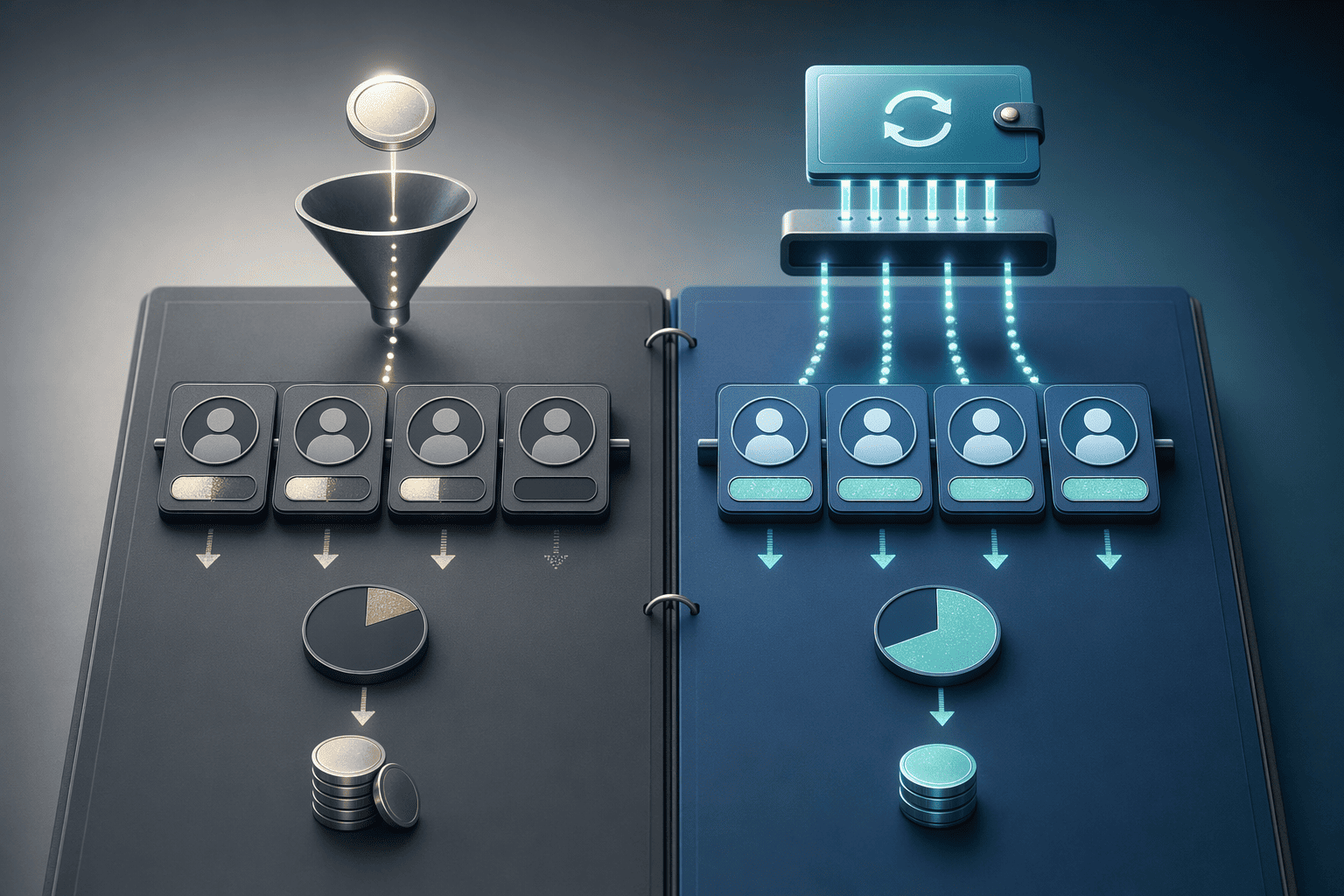
When evaluating tools that find both emails and phone numbers from LinkedIn profiles, pricing structure determines your real cost-per-usable-contact, not just the sticker price. Credit-based platforms like Apollo, Lusha, and RocketReach charge per lookup regardless of match quality. If a tool advertises $0.50 per credit but delivers a 50% match rate, your actual cost doubles to $1.00 per usable contact. Users report 20 to 30% email bounce rates and outdated direct-dial numbers, pushing real acquisition costs significantly higher than nominal per-credit pricing suggests.
Credit-Based Pricing: Burn Rate on No-Match Results
Credit-based models deduct a credit whether or not the lookup returns a valid phone number or deliverable email. Snov.io bills per contact and per channel, compounding costs when orchestrating multi-channel outreach. PeakAi uses a credit-based pricing model starting at $9 for 50 verified contacts, positioning itself within this category with transparent per-credit economics.
Subscription Models: Use-It-or-Lose-It Allocations
Subscription platforms bundle a monthly credit pool that does not roll over. Snov.io's starter plan at $29.25/month (annual) includes 50 credits plus 100 recipients per month. Teams that fail to hit the monthly cap absorb waste, but the per-lookup risk is lower since each credit is pre-paid rather than invoiced post-query.
Pre-Download Confidence Indicators vs. Post-Export Validation
Most credit-based tools charge before revealing match quality, you export a list, then discover bounce rates in your email platform. Tools offering preview-before-purchase workflows (match-quality badges in Chrome extensions, confidence scores before credit deduction) reduce waste by letting you skip low-confidence profiles. Join thousands of sales professionals who compare real cost-per-usable-contact rather than advertised per-credit rates when choosing a LinkedIn contact finder.
Choosing the Right LinkedIn Contact Finder
Global platforms like Apollo, ZoomInfo, and RocketReach deliver broader database coverage but 20-40% lower accuracy in India and emerging markets versus tools with regional data partnerships. Credit-based pricing models (Apollo, Lusha) offer pay-as-you-go flexibility but can result in 35-100% higher cost-per-usable-contact than advertised when match rates drop below 70%; subscription models (Hunter, Cognism) provide predictable monthly costs but waste unused credits.
As AI-driven data enrichment evolves, expect platforms to integrate real-time deliverability verification (beyond SMTP handshake) and carrier-level phone validation APIs in emerging markets, reducing the gap between advertised accuracy and usable contact rates. Buyers should prioritize vendors transparent about verification methodology and willing to disclose dimension-specific match rates (email vs. Phone) rather than conflated overall accuracy.
Compare dual-contact tools by testing 2-3 platforms on a 50-profile sample from your target region, measuring email deliverability plus phone connectivity rates before committing, or explore PeakAi's India-optimized enrichment for emerging-market prospecting.
Frequently Asked Questions
Can LinkedIn ban you for using contact finder tools?
LinkedIn prohibits automated scraping, so tools that parse profile DOM via Chrome extensions risk account suspension. Compliant enrichment platforms like Apollo, Lusha, PeakAi, and RocketReach query external databases without accessing LinkedIn's systems, eliminating ban risk. Use enrichment tools and avoid gray-zone scraping extensions.
Why do phone number hit rates differ from email hit rates?
LinkedIn's privacy-by-default architecture limits phone-number sharing to 5-10% of profiles, while professional email addresses appear more commonly on company websites and conference directories. Tools query external databases for both, but phone-number sources are sparser, resulting in structurally lower phone hit rates.
What does '95% accuracy' actually mean in vendor claims?
Most vendors measure syntax validation (format correctness) rather than deliverability (inbox arrival). Independent testing shows ~50% usable contact rates despite 95-98% advertised accuracy. Ask vendors whether they use SMTP handshake or real-time deliverability testing to close this methodology gap.
Do global tools work well for Indian contacts?
US/EU-optimized platforms deliver 20-40% lower accuracy in India due to carrier-level validation API gaps, prepaid SIM prevalence, and regional data-provider partnership gaps. Tools with India-specific partnerships like PeakAi or local providers listed in regional directories perform significantly better for Indian contacts.
How often should I re-verify contact data?
Re-verify active prospecting lists every 3-6 months. Professionals change jobs, email addresses expire, and phone numbers port to new carriers at 2-3% monthly decay rates. Continuous refresh cycles maintain usable contact rates and prevent outreach campaigns from bouncing on stale data.
What's the real cost per usable contact with credit-based pricing?
When match rates are 50%, a $0.50/credit tool actually costs $1.00 per usable contact, a 35-100% increase over advertised pricing. Calculate cost-per-usable-contact by dividing per-credit pricing by the tool's verified match rate (not advertised accuracy) and check refund policies for no-match results.
Is there a free tool that finds both emails and phone numbers from LinkedIn?
Most compliant tools (Apollo, Lusha, Hunter, SignalHire) offer free trials or freemium tiers with limited monthly credits (5-50 lookups). SalesQL and SignalHire Chrome extensions provide free-tier options with lookup caps. Phone-number coverage in free tiers is typically lower than email.
Sources
- Skrapp.io vs Hunter vs Snov.io: Email Finder Accuracy Deep Dive - scrupp.com
- Best LinkedIn Email Finder Tools in 2026 (Real Data & Use Cases) | Scravio - scravio.com (2026)
- Top 10 Business Contact Finder Tools in India to Generate High ... - businessinsight27.wordpress.com (2026)