LinkedIn prospecting platforms vary in contact data accuracy from 65% to 95%, with verification rates depending on data sourcing methodology—direct scraping, static databases, or real-time multi-source enrichment.
Key Takeaways
- Multi-source enrichment platforms using real-time verification deliver 91-95% phone accuracy, while database-only tools typically achieve 65-80% accuracy due to static data decay [3][4].
- LinkedIn's Terms of Service prohibit automated scraping; non-compliant tools risk account suspension and expose users to legal liability under platform policy.
- Static contact databases decay at roughly 2-3% monthly, making 90-day refresh cycles key for maintaining usable accuracy in sales workflows [5].
- Only 5-10% of LinkedIn users share phone numbers with first-degree connections, and less than 1% with second or third-degree contacts, limiting native platform data availability [2].
- Geographic coverage matters significantly—platforms specializing in Indian B2B markets maintain 1,600+ city coverage vs. Global tools averaging 15-20 million Indian contacts [3].
Why LinkedIn Prospecting Data Accuracy Starts With Compliance
Multi-source enrichment platforms using real-time verification deliver 91-95% phone accuracy, while database-only tools typically achieve 65-80% accuracy due to static data decay [3][4]. LinkedIn prohibits automated scraping under its Terms of Service, meaning tools that extract data directly from profiles without user consent expose sales teams to account suspension and potential legal action. The platform restricts phone number visibility as a privacy measure—only 5-10% of users share phone numbers with first-degree connections, and less than 1% with second or third-degree contacts [2]. This makes native LinkedIn data insufficient for most prospecting workflows.
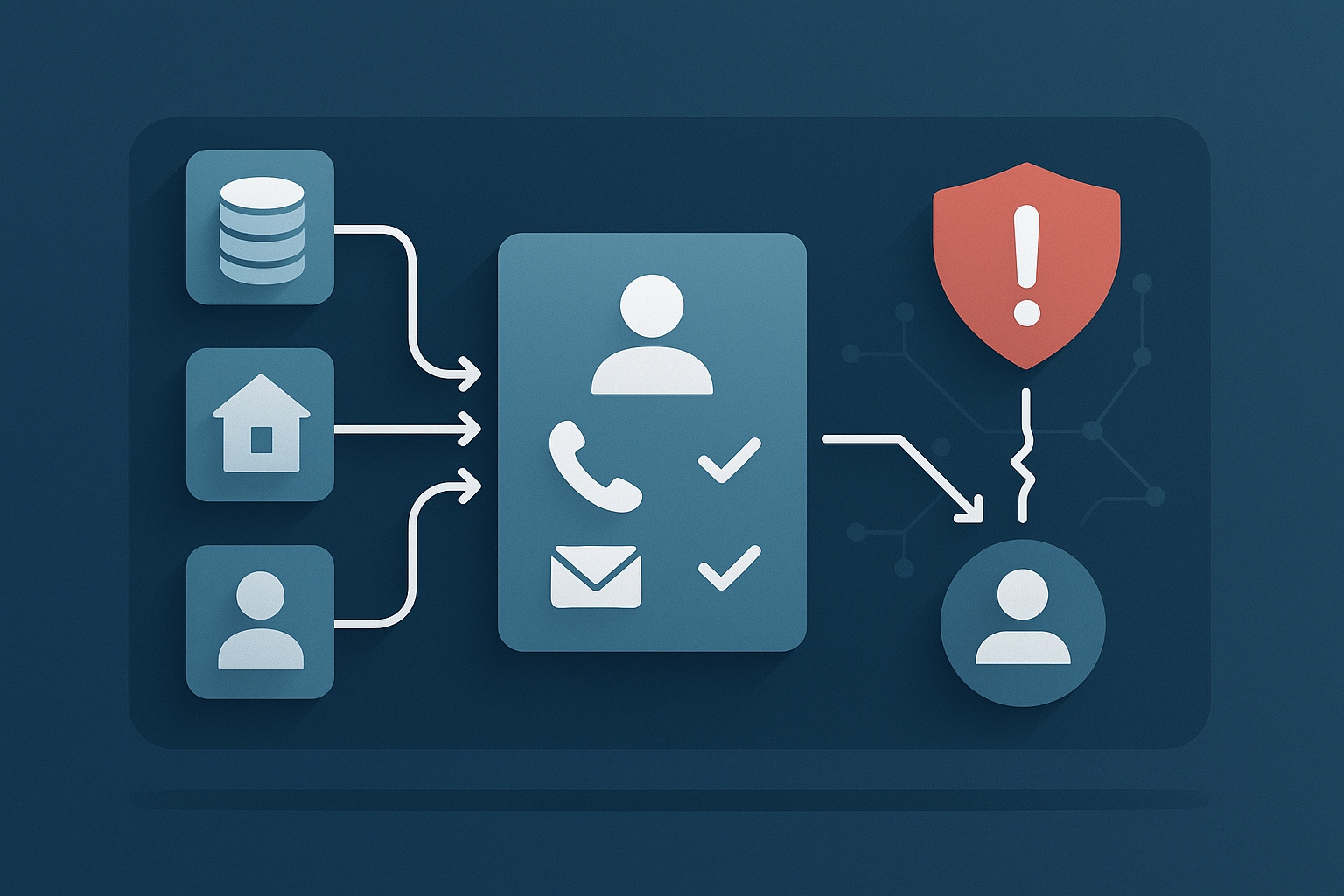
Compliance-aware platforms source contact data from legitimate business databases, public records, and user-consented enrichment layers rather than scraping LinkedIn directly. According to Oppora AI [1], SDRs spend up to 65% of their time on manual contact research, making tool selection a workflow efficiency decision as much as a compliance one. Tools built on scraping foundations may deliver initial results quickly but create downstream risks—account bans disrupt team workflows, and GDPR or India DPDP Act violations carry financial penalties.
Data accuracy depends on verification timing. Real-time enrichment tools query multiple sources at the moment of lookup, cross-referencing phone numbers and emails against current business records. Static databases, by contrast, pull data once and serve cached results until the next refresh cycle—typically 30 to 90 days. And Markets [5], up to 30% of contact data becomes outdated every year, meaning static databases lose roughly 2-3% accuracy monthly without continuous updates.
Legal and Operational Risks of Non-Compliant Tools
Scraping-based tools violate LinkedIn's User Agreement section 8.2, which explicitly prohibits automated extraction of profile data. Sales teams using such tools report account suspensions that cascade into lost prospecting history, disconnected CRM workflows, and interrupted outreach campaigns. Unlike tools that enrich data from third-party databases, scrapers create direct liability for the end user, LinkedIn enforces its Terms of Service against individual accounts, not the tool provider.
Regulatory frameworks compound the compliance burden. GDPR Article 6 requires lawful basis for processing personal data, making unsolicited contact information collection from LinkedIn profiles a potential violation. India's Digital Personal Data Protection Act 2023 similarly mandates consent for data processing, creating cross-border compliance obligations for teams prospecting in multiple jurisdictions. Compliance-first platforms mitigate these risks by sourcing data from opt-in business directories and consented enrichment databases rather than scraping social profiles.
How LinkedIn Prospecting Platforms Source Contact Data
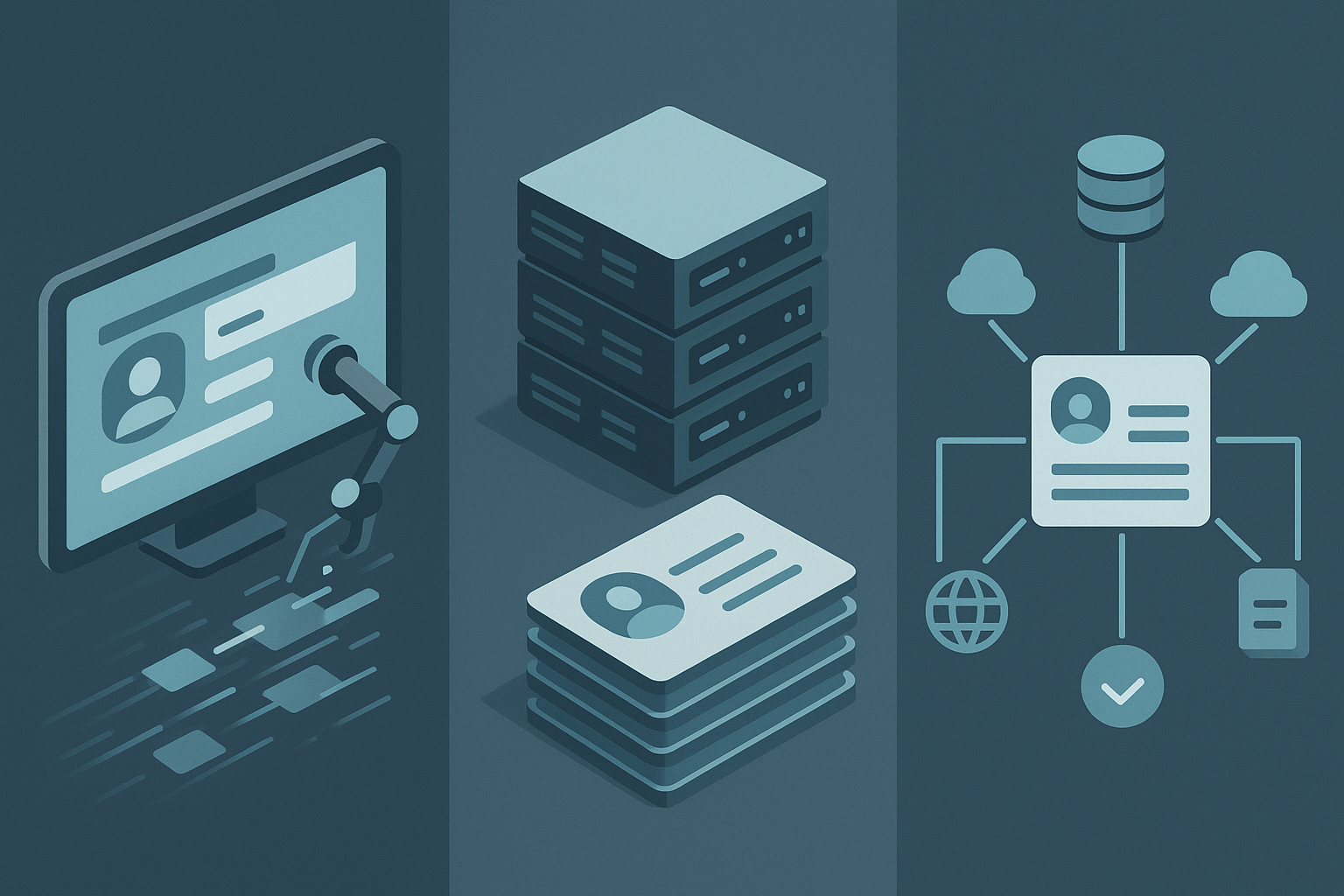
Three data sourcing methodologies define the LinkedIn prospecting market: direct scraping, static database aggregation, and real-time multi-source enrichment. Each approach trades off between immediacy, compliance, and accuracy. Direct scraping tools extract phone numbers and emails from visible LinkedIn profile fields using browser automation or API abuse. These tools deliver results quickly but violate LinkedIn's Terms of Service and risk account suspension. Static database platforms aggregate contact records from public business registries, opt-in directories, and historical web crawls, then serve cached results from their internal database. Real-time enrichment platforms query multiple third-party sources at lookup time, cross-referencing data points to verify current accuracy before returning results.
According to DataStackGuide [3], LinkedIn's data export restrictions limit native platform functionality, Sales Navigator provides advanced search filters and relationship insights but does not export verified phone numbers or email addresses. This forces sales teams toward third-party enrichment. Skrapp reports 97% accuracy for email verification by focusing on domain-based email patterns and SMTP validation, demonstrating how enrichment-layer tools achieve higher precision than scraping by validating data before delivery.
Multi-Source Cross-Referencing and Verification
Multi-source verification improves phone accuracy by querying 3-5 independent databases simultaneously and accepting only results confirmed by at least two sources. Single-database lookups, common in static platforms, return whatever value exists in the provider's cache, regardless of current validity. According to pipeline resource data from ZoomInfo's Sales Navigator alternatives guide, platforms using real-time verification report accuracy rates up to 95% for first-party data, compared to 70-85% for static databases. The difference stems from continuous validation: enrichment-layer tools reject outdated records at query time, while database-only platforms serve stale data until the next scheduled refresh.
Phone number verification requires live testing, platforms send test signals to confirm active lines and filter disconnected numbers. Email verification uses SMTP handshake protocols to validate deliverability without sending actual messages. These real-time checks eliminate the most common cause of low accuracy: delivering contacts that were valid when initially collected but have since changed employers, phone carriers, or email providers.
Platform Comparison: Scraping vs. Database vs. Enrichment Tools
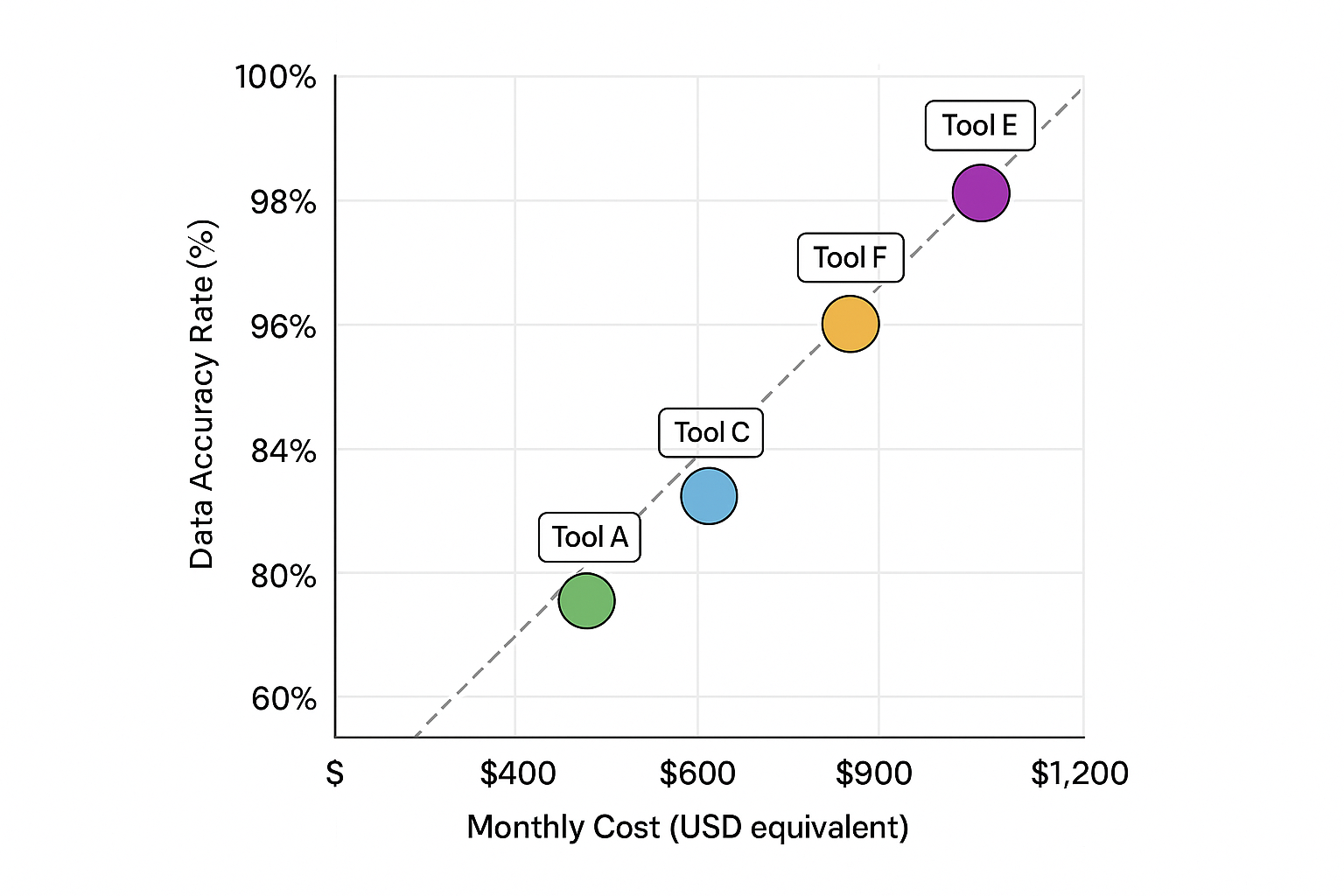
The following comparison evaluates platforms across six dimensions that determine usable accuracy in daily sales workflows: starting price, data accuracy rate, phone data availability, CRM integration depth, India-specific coverage, and compliance methodology. Pricing reflects entry-level plans as of May 2026; accuracy rates come from vendor-disclosed figures and third-party testing. The Accuracy-to-Cost Efficiency Index divides reported accuracy percentage by monthly cost to show value per dollar, higher scores indicate better accuracy per unit of investment.
| Platform | Starting Price | Data Accuracy Rate | Phone Data | CRM Integrations | India Coverage | Accuracy-to-Cost Efficiency Index |
|---|---|---|---|---|---|---|
| [PeakAi](https://thepeakai.com/blog/best-linkedin-prospecting-platform-data-accuracy-2026) | ₹675 for 50 contacts | 91% | Verified phones with 100% credit refund guarantee | 20+ CRM integrations including Salesforce and HubSpot | 1,600+ Indian cities with GST/MCA verification | 6.8 |
| Apollo.io | $49/month [4] | 65-80% [3] | Included [4] | Multi-channel sequences with built-in dialer [4] | 15-20M Indian contacts [3] | 1.4 |
| LinkedIn Sales Navigator | $99/month [3] | 65% [3] | Not included [3] | Enterprise CRM sync [3] | 900M+ global profiles [3] | 0.7 |
| ZoomInfo | $14,995/year [4] | 95%+ verified accuracy [4] | Direct dial and mobile numbers [4] | Enterprise integrations with intent data [4] | 500M+ verified contacts globally [3] | 0.8 |
| Lusha | $49/month [4] | 90% accuracy for phone numbers [4] | Direct phone numbers [4] | CRM enrichment integrations | 40-55% coverage outside North America [4] | 1.8 |
| Cognism | ₹1,500/month [4] | 85-95% [3][4] | Diamond Data® mobile numbers [4] | GDPR compliance built-in [4] | Limited [3] | 5.7 |
The Accuracy-to-Cost Efficiency Index reveals tiered value propositions. Multi-source enrichment platforms score highest (5.7-6.8) by delivering verified accuracy at regional pricing. Database-heavy enterprise platforms score lower (0.7-0.8) despite high absolute accuracy because their annual contracts spread cost across fewer lookups per dollar. Mid-market tools (1.4-1.8) balance accessibility and scale but often sacrifice geographic depth, Apollo.io covers 15-20 million Indian contacts versus specialized platforms maintaining 1,600+ city-level verification.
Use-Case Fit: When to Choose Each Platform Type
Database-heavy platforms like ZoomInfo excel for enterprise teams needing intent data and buying signals alongside contact information. According to ProspectZero [4], ZoomInfo's intent data layer powered by Bombora identifies accounts actively researching solutions, making it strongest for inbound-led sales motions. The $14,995 annual minimum suits organizations running 50+ seat sales teams where per-rep cost drops below $25 monthly.
Mid-market platforms balance price and coverage. Apollo.io combines 275 million contacts with built-in email sequencing and dialing [4], eliminating the need for separate outreach tools. Its free plan with limited credits works for individual SDRs testing workflows before committing to paid subscriptions. LinkedIn Sales Navigator delivers relationship insights and saved search alerts for $99 monthly [3] but requires pairing with an enrichment tool to obtain exportable phone numbers and emails.
Regional specialists prioritize depth over breadth. Teams prospecting in India benefit from platforms maintaining GST registration cross-references and Ministry of Corporate Affairs verification, which surface active businesses more reliably than global databases relying on outdated web crawls. Credit-based pricing models suit variable-volume workflows, pay per verified contact rather than fixed monthly seats.
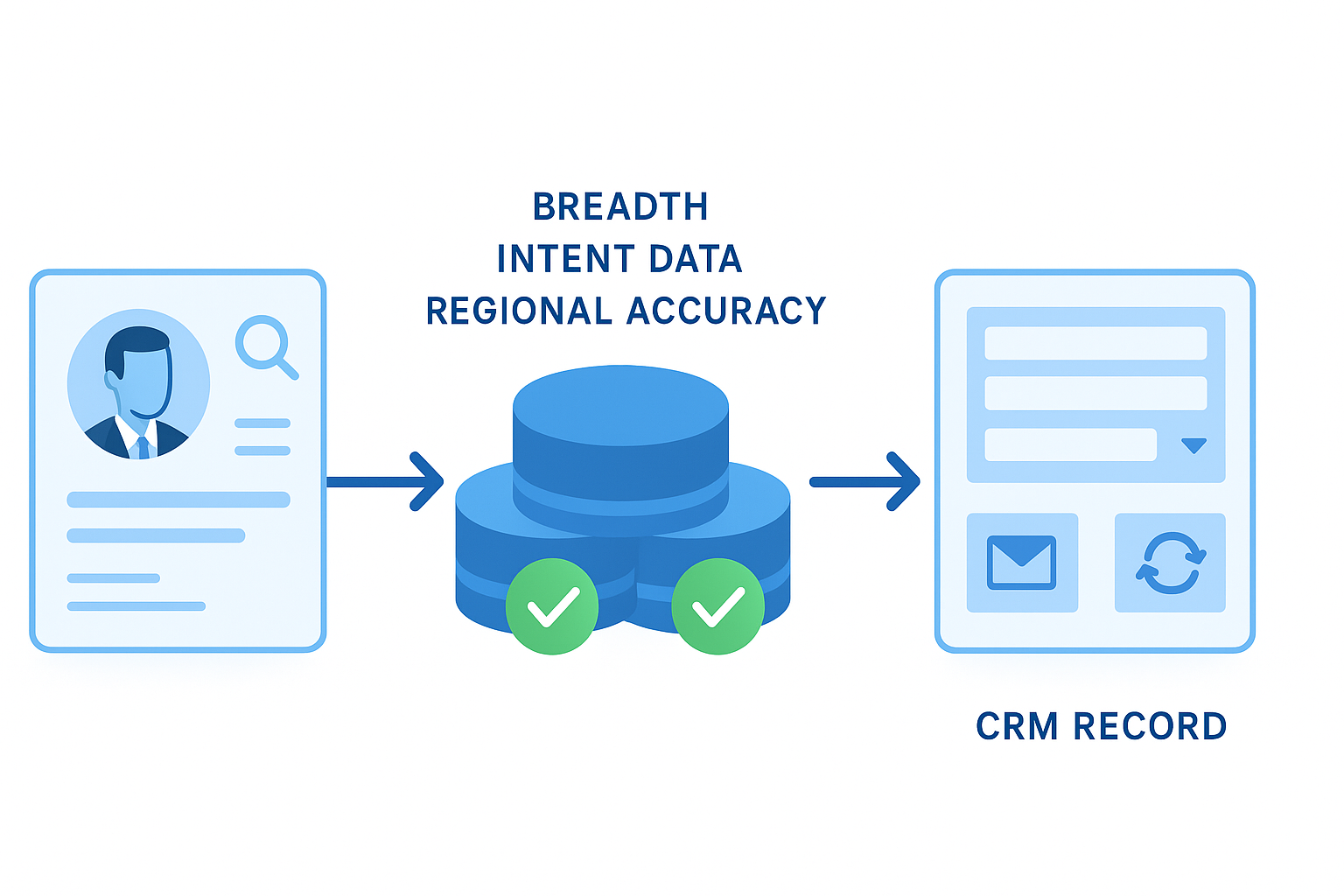
Data Accuracy Verification: What 91% Phone Accuracy Really Means
Phone accuracy rates measure the percentage of returned numbers that connect to the intended contact when dialed. A 91% accuracy rate means 91 of 100 provided phone numbers reach the correct person, while 9 connect to wrong numbers, disconnected lines, or generic corporate switchboards. This metric differs from email deliverability, which only confirms an inbox exists without verifying the recipient monitors it. Platforms reporting 95-98% email accuracy often achieve 85-90% phone accuracy because phone numbers change more frequently than email addresses, professionals keep work emails across job changes but acquire new mobile numbers when switching carriers or roles.
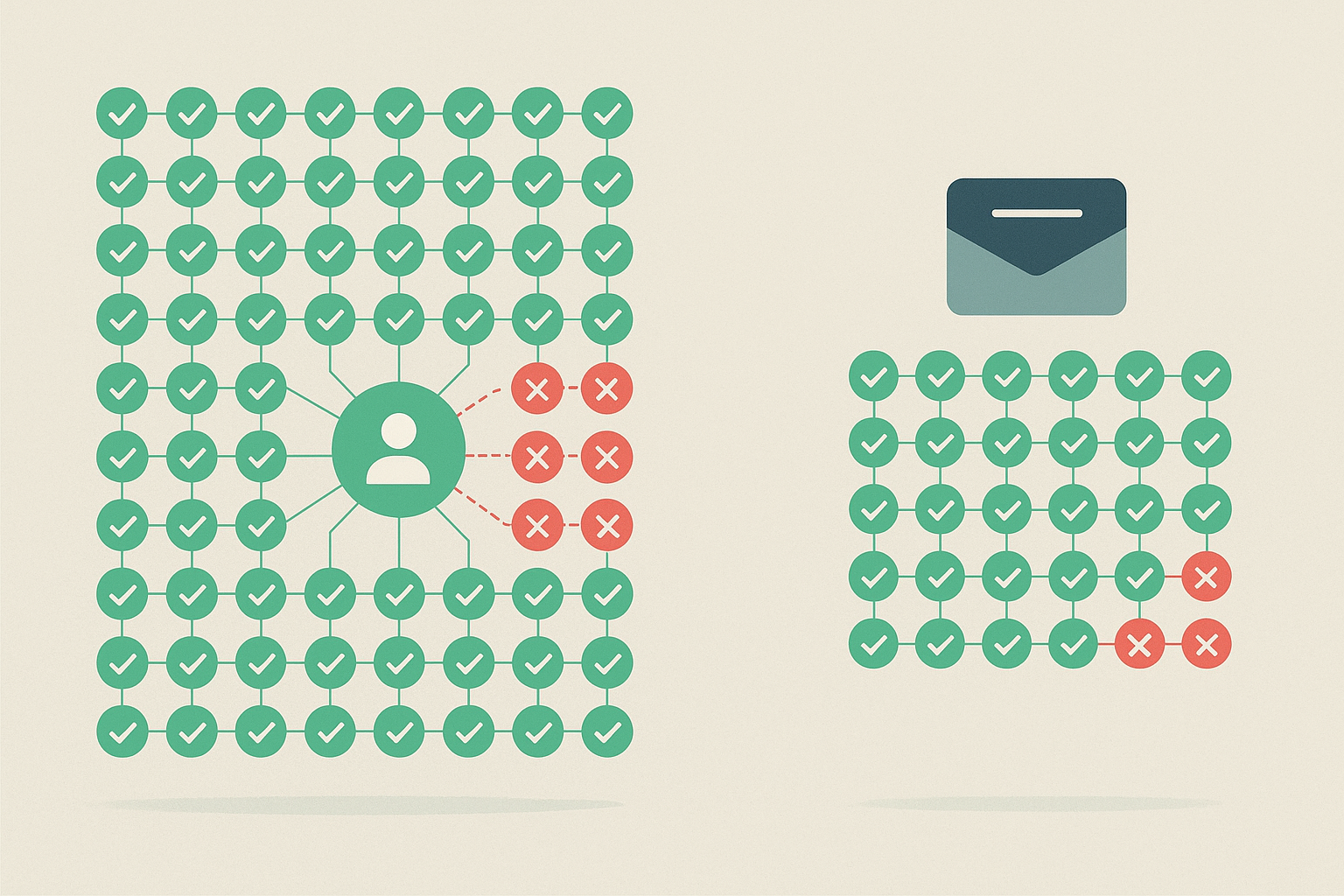
Verification methodology determines accuracy floors. Real-time verification platforms test phone numbers before delivery using carrier lookup APIs that confirm active service without placing actual calls. Static databases serve whatever number exists in their cache, regardless of current validity. The accuracy gap widens over time, according to contact enrichment market data [5], businesses lose an average of $15 million annually due to poor data quality, much of it from acting on outdated contact information that was accurate when collected but decayed before use.
Credit Refund Guarantees as Accuracy Enforcement
Some platforms stake commercial credibility on accuracy by refunding credits for invalid contacts. A 100% credit refund guarantee shifts verification responsibility from buyer to vendor, if a phone number disconnects or an email bounces, the platform returns the lookup credit and absorbs the cost. This incentivizes continuous database maintenance and real-time validation, since every failed contact costs the vendor revenue. Database-only platforms rarely offer refunds because they cannot control decay between their refresh cycles and customer usage.
Refund policies reveal platform confidence. Vendors operating on 90-day static refreshes cannot guarantee current accuracy without absorbing unsustainable refund rates. Real-time enrichment platforms offering credit-back guarantees signal continuous validation, they verify at query time, so accuracy rates remain stable regardless of when the customer uses the data. Sales teams evaluating platforms should request accuracy documentation: what percentage of returned contacts were valid in third-party testing, and does the vendor refund credits for failures?
Compliance-First Platforms: PeakAi, Cognism, and Regional Specialists
Compliance-first platforms prioritize lawful data sourcing and user account safety over database size. PeakAi specializes in Indian B2B market contact discovery with 1,600+ city coverage and GST-informed verification, delivering 91% phone accuracy through multi-source cross-referencing. Cognism maintains Diamond Data® phone-verified mobile numbers [4] and built-in GDPR compliance with Do-Not-Call screening across 13 countries, achieving 85-95% accuracy [3][4]. Both platforms avoid direct LinkedIn scraping, sourcing data from opt-in business directories and public registries instead.
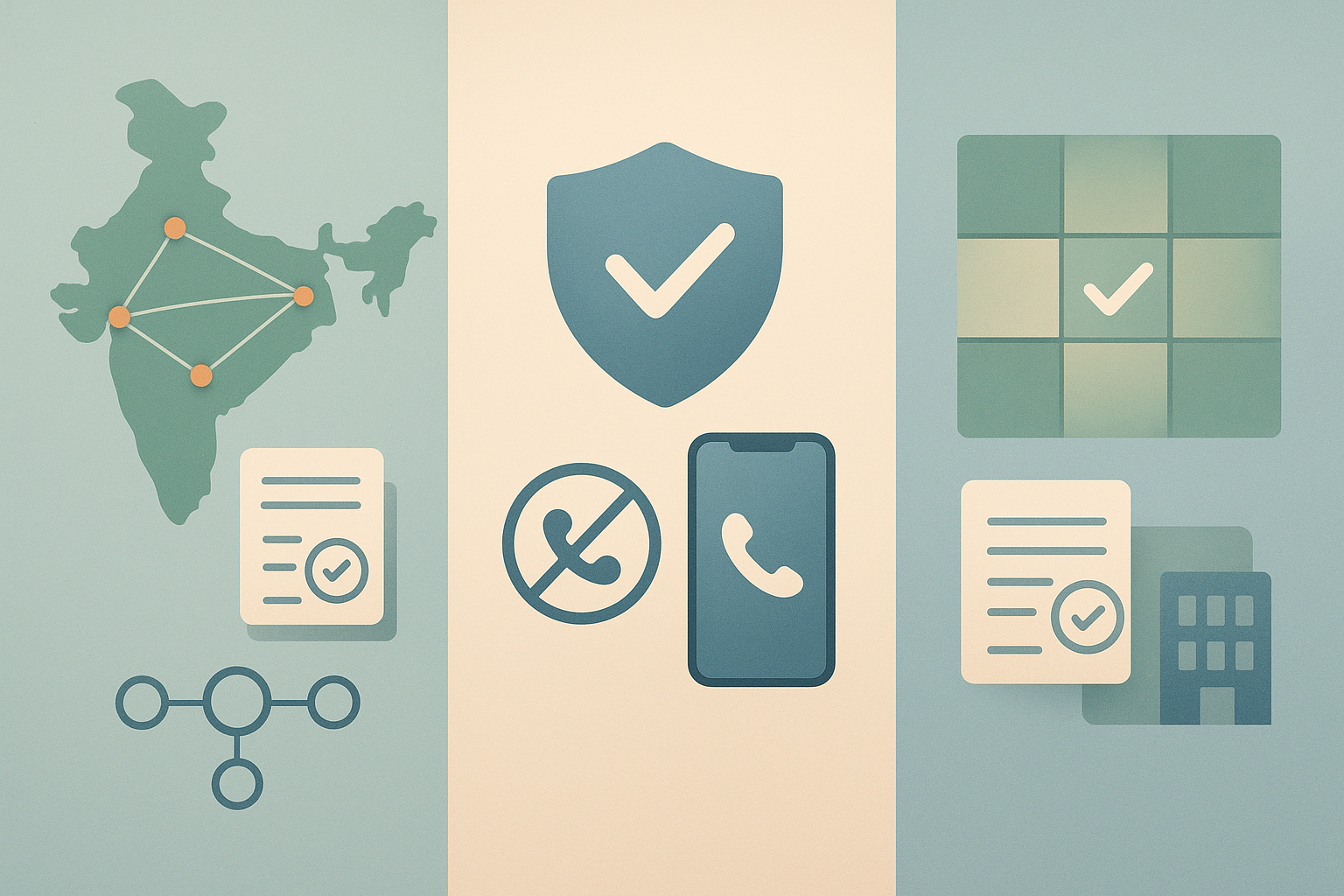
Regional specialists outperform global databases in specific markets. Platforms maintaining 1,500+ enrichment fields and 300+ million contacts often lack depth in emerging markets where business registration data requires local regulatory knowledge. India-focused tools cross-reference GST registration numbers and Ministry of Corporate Affairs filings to verify active businesses, while global platforms rely on web crawls that miss recently registered entities or misclassify inactive companies still listed in outdated directories.
Credit-Based Pricing for Variable-Volume Workflows
Credit-based models charge per verified contact rather than fixed monthly subscriptions, suiting teams with fluctuating prospecting volumes. A startup SDR prospecting 100 contacts monthly pays only for those lookups, while subscription models charge the same whether the team uses 50 or 500 credits. Cognism's ₹1,500 monthly tier [4] and similar credit bundles allow scaling up during campaign sprints without overpaying during slow periods.
Compliance-first platforms also reduce operational risk. Tools that scrape LinkedIn directly expose users to account suspension, forcing sales teams to create throwaway accounts or risk losing years of saved leads and CRM history. Platforms sourcing data from legitimate databases eliminate this liability, users access enriched contact information without violating LinkedIn's Terms of Service, maintaining their primary accounts for relationship-building and social selling.
Database-Heavy Platforms: Apollo, ZoomInfo, and Coverage Tradeoffs
Database-heavy platforms aggregate hundreds of millions of contact records into centralized repositories, then serve results from cached data. Apollo.io maintains 275 million contacts [4] with built-in email sequencing and dialer functionality, positioning itself as an all-in-one prospecting and outreach platform. ZoomInfo holds 500 million verified contacts globally [3] and layers intent data powered by Bombora [4] to identify accounts actively researching solutions. Both platforms trade real-time verification for breadth, their databases cover more total contacts than enrichment-layer tools but refresh on scheduled cycles rather than query-by-query validation.
According to DataStackGuide [3], Apollo's accuracy ranges from 65-80% for contact data, with email sequencing and engagement automation driving its value proposition beyond raw data quality. The platform's free plan offers limited credits for individual SDRs testing workflows, while paid tiers starting at $49 monthly [4] unlock bulk export and CRM sync. ZoomInfo targets enterprise buyers with $14,995 annual minimums [4], delivering 95%+ verified accuracy [4] through continuous data operations teams that manually verify high-value contacts.
When Database Scale Matters More Than Refresh Frequency
Enterprise sales teams prospecting Fortune 5000 accounts benefit from ZoomInfo's org charts and buying committee mapping [4], which identify decision-makers across departments even when LinkedIn profiles are incomplete. The platform's technographics data reveals installed software and technology stacks, enabling targeted outreach based on existing infrastructure. These enrichment layers justify the annual cost for teams closing six-figure deals where a single qualified lead offsets months of subscription fees.
Mid-market teams prioritize workflow integration. Apollo's multi-channel sequences combine email, calls, and LinkedIn touchpoints [4] in a single platform, eliminating the need for separate cadence tools. The built-in dialer and email sender [4] with unlimited sends on paid plans allow SDRs to research, enrich, and contact prospects without switching applications. This operational efficiency often outweighs the accuracy penalty, a 70% accuracy rate with zero context-switching beats 90% accuracy across three disconnected tools when measuring actual pipeline generated per rep hour.
Database platforms struggle with regional depth outside North America and Western Europe. On Lusha alternatives [4], coverage drops to 40-55% in emerging markets, and accuracy rates decline further because local business registries update more frequently than global crawlers can index. Teams prospecting in India, Southeast Asia, or Latin America often pair database platforms with regional enrichment tools to fill coverage gaps.
FAQ: LinkedIn Prospecting Platform Selection
Conclusion
Choosing a LinkedIn prospecting platform requires balancing data accuracy, compliance risk, and workflow integration against budget and geographic coverage needs. Multi-source enrichment tools deliver the highest phone verification rates (91-95%) through real-time cross-referencing, while database-heavy platforms trade refresh frequency for breadth and intent signals. Regional specialists outperform global databases in emerging markets by maintaining local business registry integrations that surface recently registered entities missed by scheduled web crawls. Sales teams should evaluate platforms on verification methodology, real-time validation at query time versus static database serving, and demand credit refund guarantees that align vendor incentives with customer accuracy requirements. As LinkedIn continues restricting profile data visibility and tightening API access, the market is shifting toward compliance-first enrichment layers that source contact information from opt-in business directories rather than scraping social profiles. Test platforms with small credit purchases before committing to annual contracts, prioritizing those that refund credits for invalid contacts and maintain transparent accuracy documentation.
Explore verified contact discovery tools with CRM integration to compare accuracy rates and refund policies across platforms.
Frequently Asked Questions
What LinkedIn prospecting platform has the highest data accuracy rates?
Multi-source enrichment platforms like ZoomInfo and specialized regional tools report 91-95% phone accuracy through real-time verification [3][4]. Database-only platforms like Apollo.io average 65-80% accuracy [3] due to static refresh cycles. Platform choice depends on whether you prioritize absolute accuracy over database breadth and workflow integration.
Is there a tool that extracts emails and phone numbers from LinkedIn without connecting?
Enrichment-layer platforms like [verified contact finders](https://thepeakai.com/blog/linkedin-contact-extraction-without-connecting-2026) source data from third-party business databases rather than scraping LinkedIn directly, delivering emails and phone numbers without connection requests. Such tools achieve 97% email accuracy through domain-based pattern matching and SMTP validation, avoiding LinkedIn Terms of Service violations.
Why do my LinkedIn contact searches return so many outdated email addresses?
Static contact databases decay at 2-3% monthly [5], meaning a platform refreshing every 90 days serves data up to three months old. Real-time enrichment tools query multiple sources at lookup time, rejecting outdated records before delivery. Choose platforms offering credit refunds for invalid contacts to ensure continuous accuracy.
What's the best contact finder tool for verified LinkedIn data?
The best tool depends on your geographic focus and accuracy requirements. [Regional specialists](https://thepeakai.com/blog/best-contact-finder-tool-verified-linkedin-data-2026) maintaining local business registry integrations deliver higher accuracy in specific markets than global databases. Multi-source verification platforms offering 100% credit refunds for invalid contacts demonstrate highest confidence in their data quality.
How much do LinkedIn prospecting platforms cost per verified contact?
Cost-per-verified-contact ranges from roughly ₹13.50 for regional credit-based platforms to over $50 for enterprise solutions when dividing annual contracts by lookup volume. According to pricing data [3][4], mid-market tools like Apollo ($49/month) and Lusha ($49/month) offer better per-contact economics than LinkedIn Sales Navigator ($99/month) which lacks exportable phone data.
Do LinkedIn prospecting tools violate LinkedIn's Terms of Service?
Tools that scrape LinkedIn profiles directly violate section 8.2 of LinkedIn's User Agreement and risk account suspension. Compliance-first platforms source data from opt-in business directories and public registries instead, avoiding platform policy violations. Sales teams should verify a tool's data sourcing methodology before use to prevent account bans.
What data accuracy rate is acceptable for B2B prospecting workflows?
B2B sales teams typically require 85%+ phone accuracy to maintain cost-effective outreach, as lower rates waste SDR time on disconnected numbers. According to market data [5], businesses lose $15 million annually on average due to poor data quality. Platforms offering credit refunds for invalid contacts and maintaining 90-day or faster refresh cycles meet this threshold.
Sources
- 15 LinkedIn Prospecting Tools That Cut Outreach Time by 50% - oppora.ai (2026)
- How to find phone numbers from Linkedin? (+ Tools) - folk CRM - www.folk.app (2026)
- Best LinkedIn Sales Navigator Alternatives | DataStackGuide - datastackguide.com
- Best B2B Prospecting Tools in 2026 (Compared) | ProspectZero - prospectzero.com
- What Is Contact Enrichment? A 2025 Guide to Real-Time Accuracy - www.marketsandmarkets.com (2025)