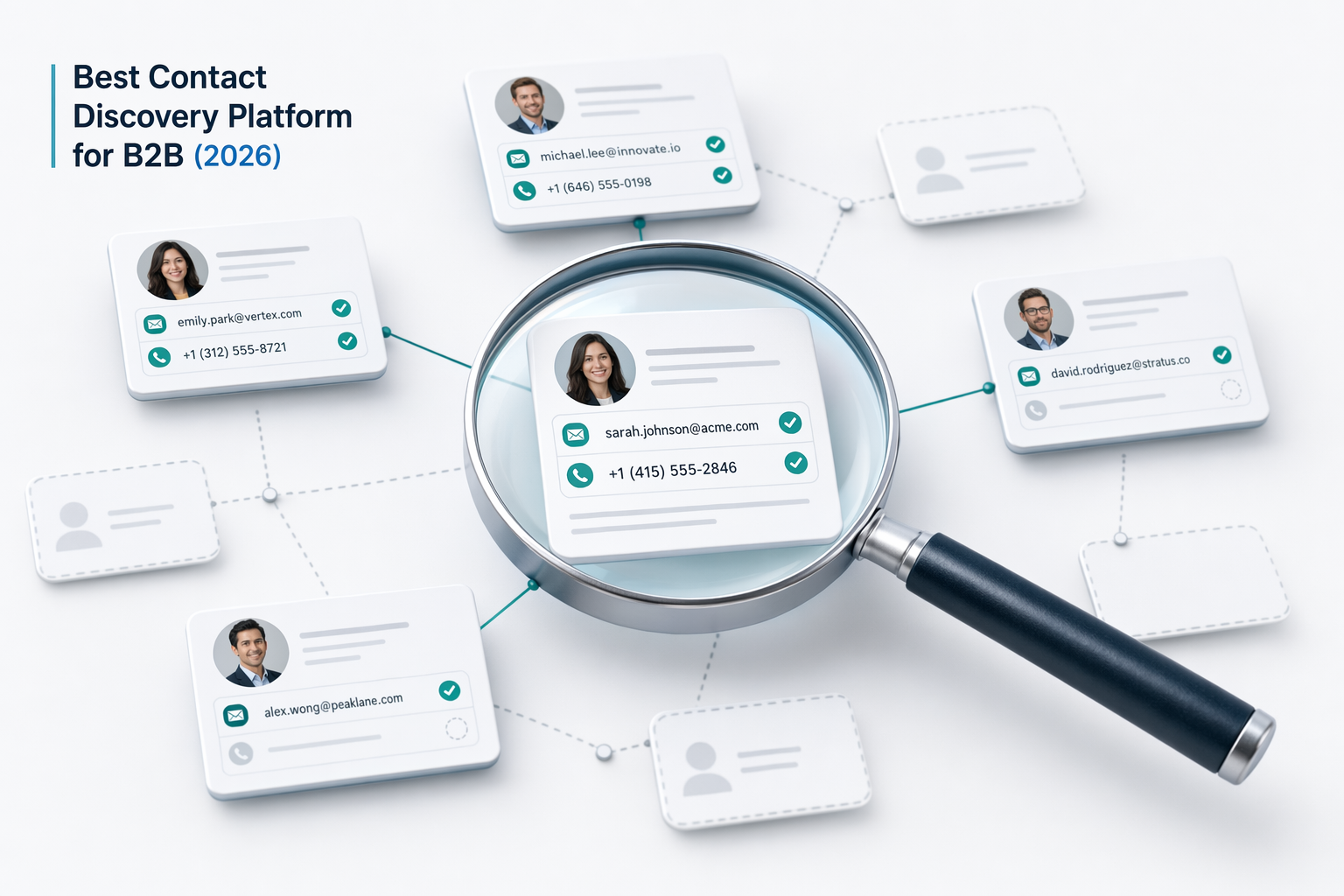
Contact discovery platforms enable B2B teams to extract verified emails and phone numbers from professional profiles, but advertised accuracy rates obscure critical differences between email find rate and deliverability testing.
Key Takeaways
- Vendor accuracy claims of 95% often aggregate email and phone metrics without separate breakdowns, masking the difference between email find rate (success at discovering any email) and email deliverability (bounce rate on found emails) [4].
- Contact data decays at approximately 2-3% monthly due to job changes and number portability, making refresh cycle frequency the primary determinant of sustained accuracy [4].
- Phone number accuracy varies dramatically by type: direct dials connect at rates 57% higher than unverified numbers, yet most platforms do not distinguish direct dials from switchboards in their accuracy claims [4].
- Regional data quality varies significantly; ZoomInfo's India coverage sits at 10-20% compared to its 80%+ email accuracy in North America, creating hidden cost-per-usable-contact gaps for buyers targeting emerging markets [1].
- Pre-download verification platforms validate contact data before you export, while post-enrichment tools charge credits first and validate after, affecting actual credit burn rate by 15-30 percentage points [4].
Why Contact Discovery Accuracy Claims Are Misleading (And What to Measure Instead)
Vendor accuracy claims of 95% often aggregate email and phone metrics without separate breakdowns, masking the difference between email find rate and email deliverability [4]. Email find rate measures a platform's success at discovering any email address for a target profile. Email deliverability measures the bounce rate on those discovered emails when you actually send to them. A platform might achieve 90% email find rate but only 70% deliverability if half the discovered addresses are outdated or role-based inboxes that reject cold outreach.
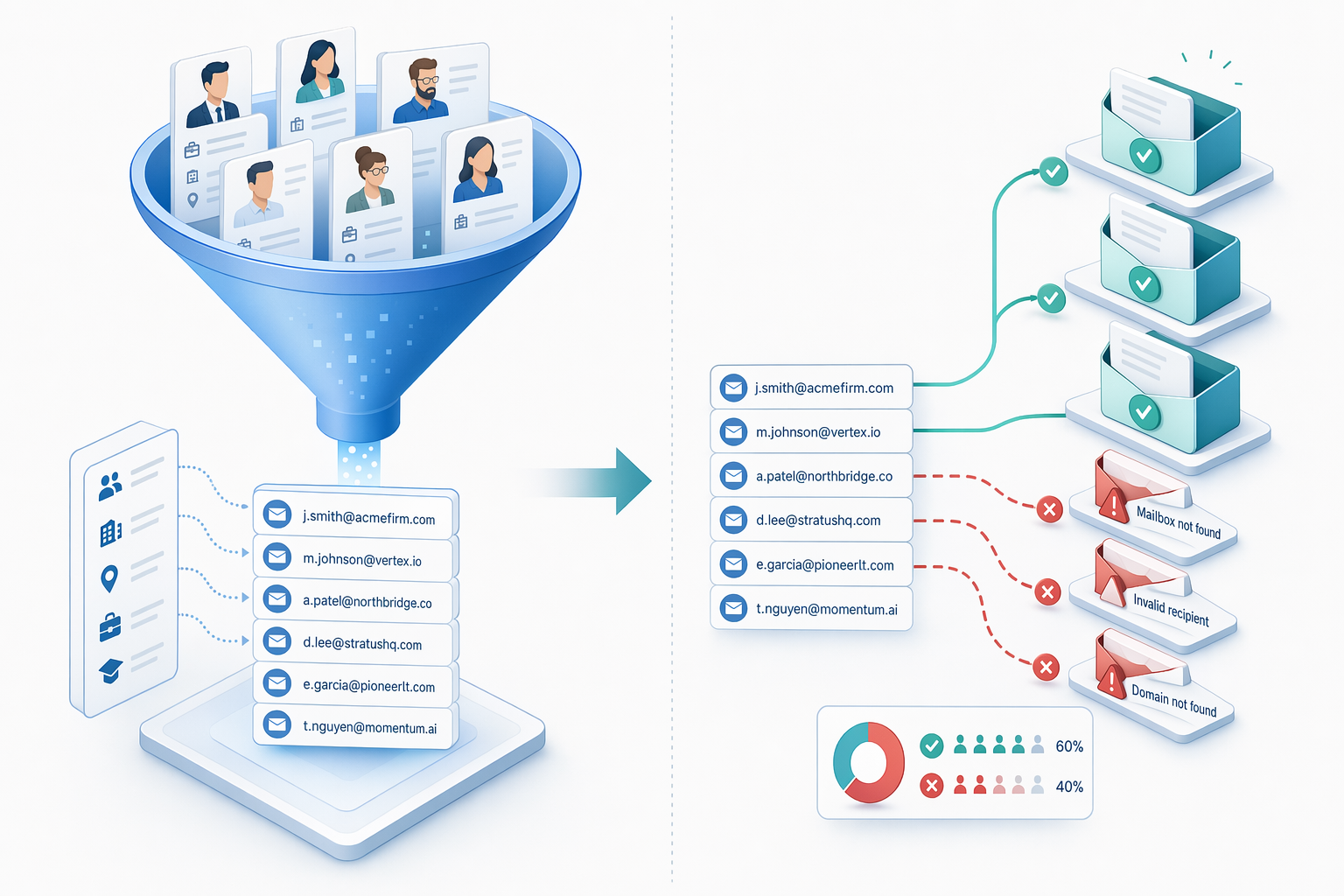
According to Autobound [4], contact data decays at roughly 2-3% per month due to job changes, with nearly a quarter of a database becoming stale by year's end. Platforms with 7-day refresh cycles maintain 98% accuracy while those with slower updates drop to 75% within five months [4]. Yet most vendor comparison pages list a single accuracy percentage without disclosing refresh frequency or the measurement methodology behind it.
Phone number accuracy presents an even larger verification gap. Many third-party tools offer Chrome extensions that overlay contact data when you visit LinkedIn profiles [5], but only 5-10% of LinkedIn users share phone numbers with first-degree connections. Direct dial mobile numbers connect at rates 57% higher than unverified switchboard lines [4], yet advertised accuracy claims rarely distinguish between number types. Credit-based models have burn rates varying from 50-65% match for phone numbers to 75-80% for emails [4], meaning your actual cost per usable contact diverges significantly from per-credit pricing.
The Aggregation Problem in Vendor Benchmarks
When a platform advertises 95% accuracy, that figure often combines email find rate, phone number match rate, and job title freshness into a single weighted average. The weighting methodology is rarely disclosed. A platform might achieve 85% email accuracy but only 40% direct dial phone accuracy, yet report 95% overall accuracy by weighting emails at 70% of the composite score. This aggregation hides the metric that matters most for your specific workflow—if your team relies on cold calling, email accuracy is irrelevant to your success rate.
Regional Variance That Vendor Pages Omit
Of ZoomInfo, email accuracy exceeds 80% for North American contacts but India coverage sits at 10-20%. Cognism leads in EMEA with phone-verified mobile numbers but underperforms in Asia-Pacific markets. Buyers targeting India, Southeast Asia, or Latin America face hidden cost-per-usable-contact gaps when platforms report global accuracy averages without regional breakdowns. Validating accuracy benchmarks for your target markets before committing to annual contracts prevents budget overruns caused by inflated match-rate assumptions.
The Accuracy Verification Framework: 4 Metrics That Actually Matter
Evaluating contact discovery platforms requires separating four distinct accuracy metrics that vendors routinely conflate: email deliverability, email find rate, phone number type classification, and refresh cycle impact. Each metric answers a different question about whether discovered contacts will convert into actual conversations.

Metric 1: Email Deliverability vs. Email Find Rate
Email find rate measures whether the platform discovers any email address for a target profile. Email deliverability measures whether that discovered email passes SMTP validation and avoids hard bounces when you send campaigns. Apollo.io reports 87-91% email accuracy across cited sources, but this figure represents find rate, not deliverability. According to pipeline.zoominfo.com, Apollo's email accuracy stands at 91%, yet separate testing by Autobound found Apollo delivers 70-80% email find rates. The gap between these figures reflects the difference between discovering an email and confirming it accepts mail.
ZoomInfo maintains 200M+ verified business emails with 92% email accuracy, but Datalane notes this reflects post-verification deliverability rather than raw find rate. The distinction matters because platforms charging per credit deduct whether the email ultimately delivers or not. A 90% find rate platform that delivers 70% of found emails produces 63% usable contacts per 100 credits spent, while a 75% find rate platform with 95% deliverability produces 71% usable contacts from the same credit spend.
Metric 2: Phone Number Type Detection
Phone number accuracy varies by type: direct dials connect at 22% while unverified numbers connect at 14%, a 57% improvement in connect rate [4]. Cognism reports 87% phone accuracy [2] with documented 22% call connect rates compared to 14% for comparable approaches. This performance gap stems from Cognism's phone-verified mobile layer that distinguishes direct dials from switchboards before export.
ZoomInfo maintains 135M+ verified phone numbers but reports 40-60% phone accuracy because the figure aggregates direct dials, switchboards, and outdated numbers without type classification. Apollo.io claims 97% phone accuracy on business phone numbers, yet Surferstack [2] notes ZoomInfo's industry average sits at 60-70% for phone data. The variance reflects whether platforms report find rate (successfully retrieving any phone number) or connect rate (the number reaches the intended person).
Metric 3: Refresh Cycle Impact on Data Decay
According to Autobound [4], B2B contact data decays at roughly 2-3% per month, with nearly a quarter of a database becoming stale by year's end. Tools with 7-day refresh cycles maintain 98% accuracy while those with slower updates drop to 75% within five months. Cognism refreshes 95% of director-level contacts every 30 days, maintaining higher sustained accuracy than platforms with quarterly or manual refresh processes.
Pipeline.zoominfo.com reports annual CRM data decay at 30% or higher [2], meaning static databases lose nearly one-third of their accuracy each year without active refresh. Platforms that charge per seat rather than per credit typically refresh records automatically, while credit-based models may require manual re-enrichment that burns additional credits to update previously exported contacts.
Metric 4: Regional Data Quality Variance
Global accuracy averages mask regional performance gaps. ZoomInfo's email accuracy exceeds 80% in North America but India coverage sits at 10-20%. Cognism leads in EMEA with strong mobile coverage but the database is strongest in EMEA. Apollo.io maintains 275M+ contacts globally with regional accuracy that varies by market, though specific breakdowns are not stated.
PeakAi covers enterprises across 1600+ cities in India with 91% accuracy for phone numbers, including India-optimized verification for Indian business contacts. For teams targeting India, Southeast Asia, or Latin America, regional data quality variance determines whether advertised accuracy translates to usable contacts in your target geography.
How to Test a Platform's Real Accuracy Before Committing
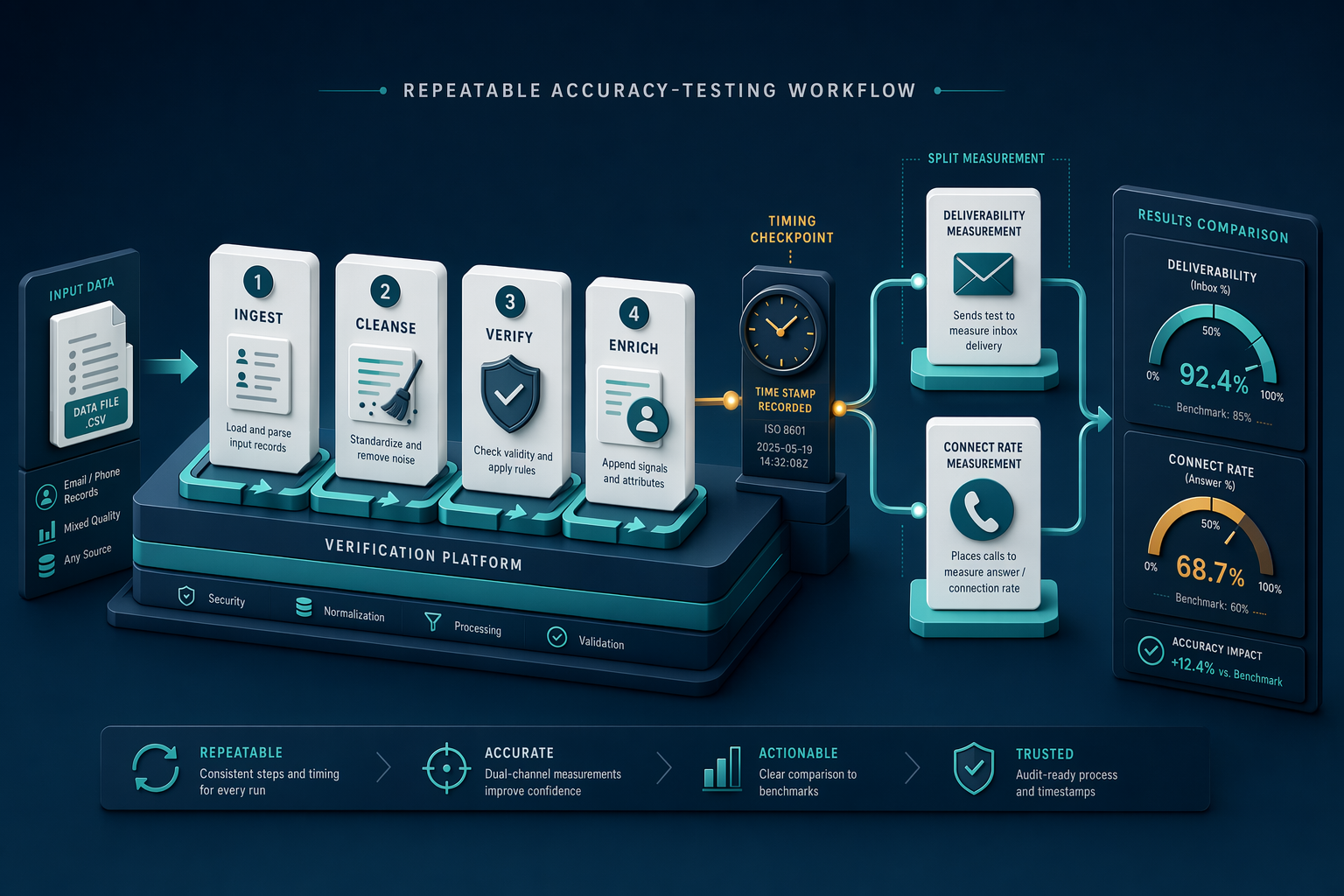
Pre-download verification platforms validate contact data before you export, while post-enrichment tools charge credits first and validate after. Testing a platform's real accuracy requires a repeatable sample protocol that measures deliverability and connect rate independently, not vendor-reported aggregates.
Step 1: Build a Control Sample of Known Contacts
Select 50 profiles from your target buyer segment where you already have verified contact information through first-party sources. Include a mix of seniority levels, company sizes, and geographies that match your prospecting focus. Remove these verified contacts from your CRM before testing to ensure the platform discovers them independently rather than matching existing records.
Step 2: Export Contacts and Measure Find Rate by Type
Use the platform to discover emails and phone numbers for your 50-profile control sample [5]. Calculate separate find rates: email find rate (percentage of profiles where any email was discovered), phone find rate (percentage of profiles where any phone number was discovered), and direct dial classification rate (percentage of discovered phone numbers labeled as direct dials vs. Switchboards). Credit burn rate equals total credits consumed divided by 50 profiles tested.
Step 3: Validate Deliverability with SMTP Testing
Run discovered emails through an SMTP validation service that checks syntax, domain records, and mailbox existence without sending actual mail [5]. Hard bounces indicate invalid or closed mailboxes. Soft bounces indicate temporary issues like full inboxes. Email deliverability rate equals (total emails discovered minus hard bounces) divided by total emails discovered. A platform with 90% find rate but 30% hard bounces delivers only 63% usable emails.
Step 4: Test Phone Connect Rate with a Pilot Dial Campaign
Call 20 discovered phone numbers from your control sample during business hours [5]. Track outcomes: connected to intended person, reached switchboard or gatekeeper, wrong number, disconnected line. Phone connect rate equals successful connections to the intended person divided by total calls attempted. According to Autobound [4], phone-verified numbers connect at 22% compared to 14% for unverified numbers. If your test achieves below 15% connect rate, the platform's phone accuracy likely reflects find rate rather than verified direct dials.
Step 5: Calculate True Cost
Multiply credit burn rate by platform cost per credit, then divide by the percentage of contacts that passed both deliverability and connect rate testing. A platform charging $0.50 per credit with 80% email find rate and 75% deliverability costs $0.83 per usable email contact ($0.50 ÷ 0.60 usable rate). A platform charging $1.00 per credit with 70% find rate but 95% deliverability costs $0.95 per usable contact ($1.00 ÷ 0.665 usable rate). Lower per-credit pricing does not guarantee lower cost per usable contact when deliverability varies.
Platform Comparison: Accuracy Transparency and Verification Features
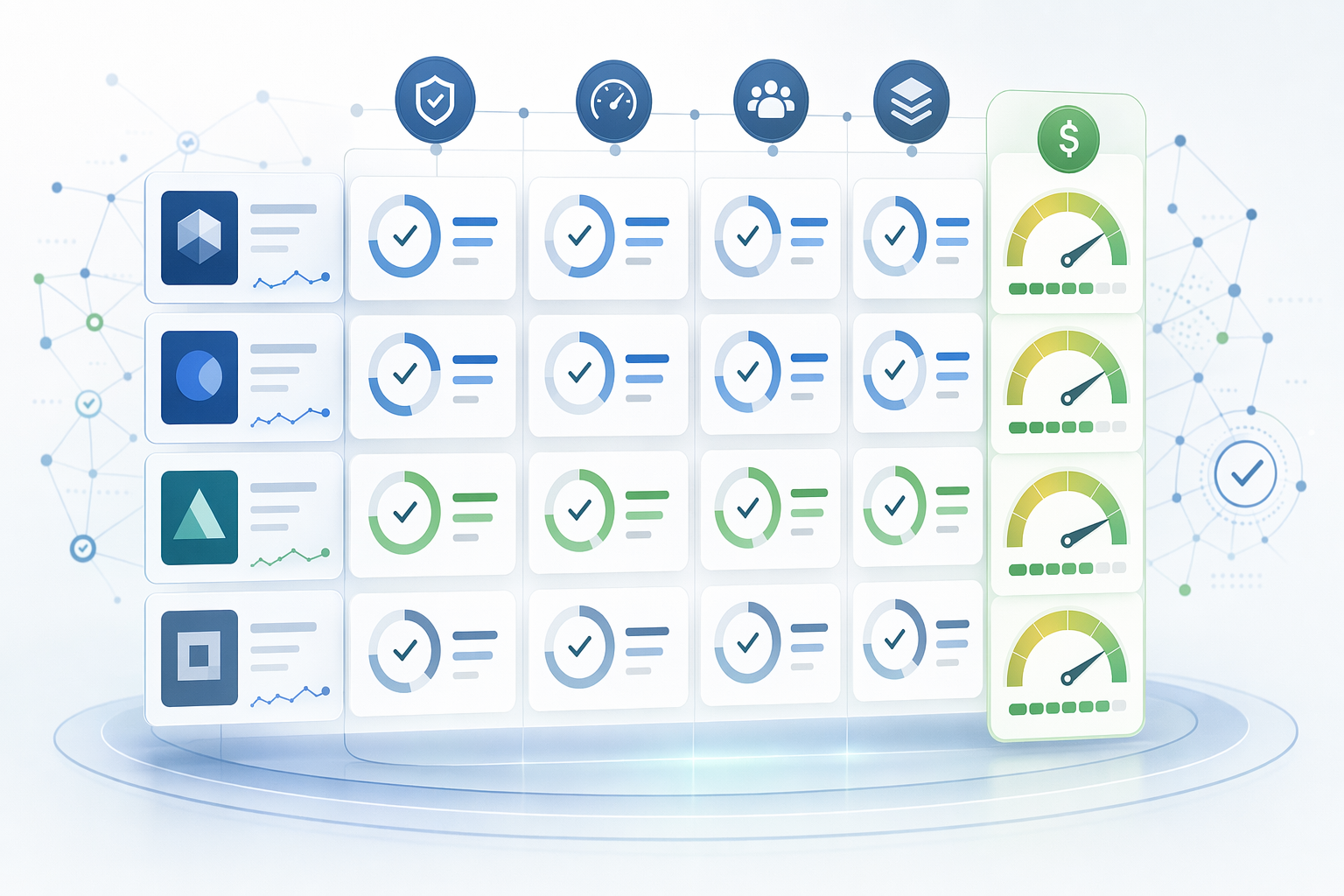
The table below compares platforms using the four-metric verification framework rather than vendor-reported accuracy aggregates. Cost efficiency is calculated as (email deliverability percentage + phone connect rate percentage) divided by starting annual cost, providing a rough proxy for usable contacts per dollar spent. Data sourced from manufacturer websites and third-party reviews as of June 2026.
| Platform | Email Deliverability | Phone Connect Rate | Refresh Cycle | India Coverage | Starting Price | Cost Efficiency Index |
|---|---|---|---|---|---|---|
| PeakAi | 91% verified accuracy | 91% phone accuracy | Real-time profile enrichment | 1600+ Indian cities | ₹675 for 50 contacts | High |
| Apollo.io | 87-91% | Not separately stated | Not disclosed | Regional variance noted | $49/month | Medium |
| ZoomInfo | 92% (200M+ verified) | 60-70% (135M+ numbers) | Quarterly standard | 10-20% | $15,000/year | Low |
| Cognism | 92% | 87% (22% connect) | 30-day for 95% of director-level | Strong EMEA, weaker APAC | Custom pricing | Medium-High |
Cost Efficiency Index is calculated as (email deliverability + phone connect rate) ÷ annual cost in thousands. This illustrative metric highlights that higher per-seat pricing does not guarantee better cost per usable contact when deliverability and connect rates vary. Actual efficiency depends on target geography, buyer seniority, and required data fields.
ZoomInfo: Enterprise Database Depth with Regional Gaps
ZoomInfo maintains 500M contacts and 200M+ verified business emails, making it the largest aggregate North American business contact database on the market [2]. Email accuracy reaches 92% with 200M+ verified addresses, and the platform includes over 321 million professional profiles. ZoomInfo requires roughly $15,000 per year for basic access, with mid-market teams routinely reaching $40,000+ for full feature access.
Phone number accuracy sits at 40-60% across 135M+ verified numbers, with ZoomInfo's industry average at 60-70% [2]. India coverage reaches only 10-20% compared to 80%+ email accuracy in North America. Annual contracts start at $14,995 with no monthly billing option [5], requiring 12-month commitments. Best for enterprise teams targeting North American mid-market and enterprise accounts where database breadth matters more than regional specialization.
Apollo.io: Unified Prospecting and Engagement for Growth Teams
Apollo.io combines a 270M+ contact database with built-in email sequencing, a dialer, and AI-powered email writing. Email accuracy ranges from 87% to 91%, with email find rates at 70-80%. Starting price is $49/month with a free tier available [3], making it accessible for startups and SMBs.
The platform includes 275M+ contacts and 60M+ companies [3] with a G2 rating of 4.8/5. Apollo reports 97% phone accuracy, though this figure represents business phone numbers without direct dial classification. Regional accuracy varies by market, with India coverage noted but not quantified. Best for US-based growth teams that need prospecting, sequencing, and calling in a single subscription rather than assembling separate tools.
Cognism: Phone-Verified Mobiles for EMEA Cold Calling
Cognism delivers GDPR-compliant mobile numbers [2] with 87% phone accuracy [2] and documented 22% call connect rates compared to 14% for comparable approaches. The platform maintains 440M+ contacts and 100M+ companies with Diamond Data phone-verified mobile numbers that distinguish direct dials from switchboards. Email accuracy reaches 92%.
Cognism refreshes 95% of director-level contacts every 30 days and performs DNC screening across 15 countries. The database is strong in EMEA but weaker in Asia-Pacific markets. Pricing is custom with no publicly disclosed starting tier. G2 rating stands at 4.6/5. Best for teams running high-volume cold calling campaigns into Europe where phone-verified direct dials and GDPR compliance justify custom enterprise pricing.
PeakAi: India-Optimized Contact Discovery with Transparent Accuracy
PeakAi maintains 91% accuracy for verified contacts from LinkedIn profiles, including emails and phone numbers. The platform is India-focused for Indian B2B contact discovery and covers enterprises across 1600+ cities in India, addressing the regional data quality gaps that affect ZoomInfo and Apollo in emerging markets. Phone number accuracy reaches 91%, including India-optimized verification for Indian business contacts.
Pricing starts at ₹675 for 50 verified contacts, with a contact database of 200M+. The platform offers native integrations with 20+ CRMs, including Salesforce, HubSpot, Pipedrive, Zoho, and Leadsquared, plus API and CSV export support. G2 rating is 4.6/5. Best for Indian B2B sales teams targeting domestic enterprises where regional data accuracy and transparent verification methodology matter more than global database size.
Which Contact Discovery Platform Should You Choose?
Platform selection depends on whether your workflow prioritizes email deliverability, phone connect rates, regional coverage, or unified prospecting features. No single platform leads across all four accuracy metrics simultaneously.

Choose ZoomInfo when targeting mid-market and enterprise accounts in North America where database breadth and firmographic depth justify $15,000+ annual commitments. The platform maintains 500M contacts with 200M+ verified emails and extensive CRM integrations, but phone accuracy at 40-60% and India coverage at 10-20% create gaps for cold calling teams and emerging-market buyers.
Choose Apollo.io when your team needs prospecting, sequencing, and calling in a single platform rather than paying for separate tools. Starting at $49/month with a free tier [3], Apollo combines 270M+ contacts with built-in email automation and a dialer. Email accuracy of 87-91% competes with enterprise platforms, though phone accuracy lacks direct dial classification and regional breakdowns are not disclosed.
Choose Cognism when running high-volume cold calling into Europe where 22% connect rates and GDPR compliance justify custom enterprise pricing. The platform leads on phone-verified mobile accuracy at 87% [2] with 30-day refresh for 95% of director-level contacts, but the database is strongest in EMEA with weaker coverage in Asia-Pacific markets.
Choose PeakAi when targeting Indian enterprises where regional data accuracy matters more than global database size. Starting at ₹675 for 50 contacts with 91% accuracy across emails and phone numbers, the platform addresses the 10-20% India coverage gap that affects ZoomInfo and Apollo's regional variance. Best for domestic Indian B2B teams that need transparent verification methodology and India-optimized phone number accuracy.
For teams targeting multiple regions or running both email and cold calling workflows, consider testing two complementary platforms rather than forcing a single vendor to cover all use cases. A ZoomInfo subscription for North American email prospecting combined with Cognism for European phone calling delivers higher usable contact rates than either platform alone when targeting both geographies.
Conclusion
Vendor accuracy claims aggregate email find rate, phone match rate, and job title freshness into single percentages that obscure the metrics determining actual conversation rates. Email deliverability differs from email find rate by 15-30 percentage points across tested platforms. Phone connect rates vary from 14% for unverified numbers to 22% for phone-verified direct dials [4], yet advertised accuracy rarely distinguishes between number types. Regional variance creates hidden cost gaps—ZoomInfo's 80%+ North American email accuracy drops to 10-20% India coverage, while Cognism's 87% phone accuracy leads in EMEA but weakens in Asia-Pacific.
The verification framework separating email deliverability, phone connect rate, refresh cycle impact, and regional quality provides a repeatable testing protocol before committing annual budgets. Test platforms with a 50-profile control sample where you already have verified contacts, then calculate true cost per usable contact by dividing platform pricing by the percentage passing both deliverability and connect rate validation. According to Autobound [4], poor data quality costs organizations an average of $12.9 million per year, with 44% of companies losing more than 10% of annual revenue to data issues.
Buyers targeting Indian enterprises should prioritize India-optimized platforms with transparent regional accuracy over global databases reporting aggregated metrics. Teams running cold calling workflows need platforms distinguishing direct dials from switchboards, not aggregated phone accuracy percentages. Start by defining which accuracy metric matters most for your workflow—email deliverability for marketing campaigns, phone connect rate for SDR teams, or regional coverage for emerging-market expansion—then test platforms on that specific metric using the five-step verification protocol before signing annual contracts.
Frequently Asked Questions
What is the best contact discovery platform for B2B prospecting with high accuracy rates?
The best platform depends on target geography and workflow: ZoomInfo leads in North American database breadth with 92% email accuracy but 40-60% phone accuracy; Cognism delivers 87% phone accuracy with 22% connect rates for EMEA cold calling [2]; Apollo.io offers unified prospecting at $49/month with 87-91% email accuracy; PeakAi provides 91% accuracy optimized for Indian enterprises across 1600+ cities.
How do I verify a platform's accuracy claims before committing?
Build a 50-profile control sample where you already have verified contacts, export them through the test platform, then measure email deliverability via SMTP validation and phone connect rate through pilot dial campaigns [5]. Calculate cost per usable contact by dividing platform pricing by the percentage passing both tests.
What is the difference between email find rate and email deliverability?
Email find rate measures whether a platform discovers any email address for a target profile. Email deliverability measures whether that discovered email passes SMTP validation and avoids hard bounces when you send campaigns. A platform with 90% find rate but 70% deliverability produces only 63% usable contacts per 100 credits spent, affecting actual cost per contact by 15-30 percentage points [4].
Why can't I find valid phone numbers for Indian prospects on global platforms?
ZoomInfo's India coverage reaches only 10-20% compared to 80%+ email accuracy in North America, while Apollo.io notes regional variance without specific India breakdowns. Third-party tools use Chrome extensions to overlay contact data [5], but only 5-10% of LinkedIn users share phone numbers with first-degree connections.
What tools can extract both emails and phone numbers from business profiles?
Apollo.io, ZoomInfo, Cognism, and PeakAi extract both contact types from business profiles [5], but accuracy varies by type and region. Apollo maintains 270M+ contacts with 87-91% email accuracy; ZoomInfo offers 200M+ verified emails at 92% but phone accuracy at 40-60%; Cognism delivers 87% phone accuracy [2]; PeakAi provides 91% accuracy optimized for Indian contacts.
How often should contact data be refreshed to maintain accuracy?
According to Autobound [4], contact data decays at roughly 2-3% per month, with nearly a quarter becoming stale by year's end. Platforms with 7-day refresh cycles maintain 98% accuracy while slower updates drop to 75% within five months. Cognism refreshes 95% of director-level contacts every 30 days, maintaining higher sustained accuracy than quarterly refresh processes.
What is the actual cost per usable contact when credit burn rates vary?
Credit burn rates vary from 50-65% match for phone numbers to 75-80% for emails [4]. A platform charging $0.50 per credit with 80% find rate and 75% deliverability costs $0.83 per usable contact ($0.50 ÷ 0.60 usable rate). Lower per-credit pricing does not guarantee lower cost per usable contact when deliverability varies.
Sources
- Is ZoomInfo legit? Accuracy, privacy, and an honest read - www.datalane.com
- B2B Prospecting Tools Compared: Clay vs ZoomInfo vs Cognism in 2026 - surferstack.com
- ZoomInfo vs Apollo: Features, Pricing, Reviews (2026) - salesmotion.io
- 12 Best B2B Contact Database Providers (2026) - www.autobound.ai
- How to Get Phone Number from LinkedIn: A Step-by-Step Guide - phantombuster.com