
Affordable LinkedIn contact discovery tools enable startups to extract verified emails and phone numbers from LinkedIn profiles without enterprise-tier pricing, relying on pay-per-use or low-tier subscription models designed for early-stage prospecting budgets.
Key Takeaways
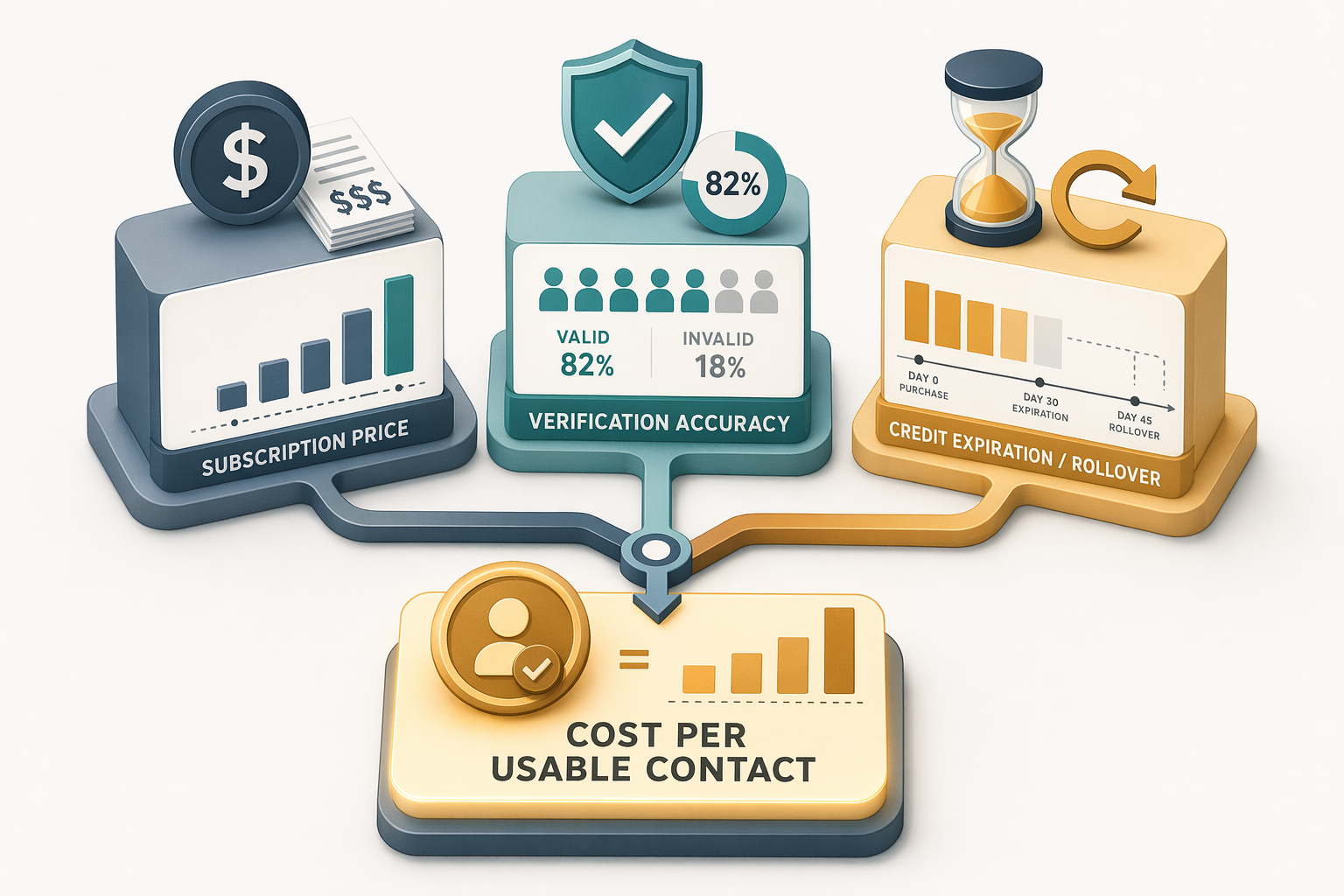
- Affordable LinkedIn contact discovery tools for startups prioritize pay-per-use or low monthly subscriptions under $50, with real cost determined by verification accuracy and credit expiration policies rather than sticker price alone.
- Contact data accuracy varies significantly — B2B database accuracy in India ranges from 65% to 98%, meaning advertised pricing can understate true cost-per-usable-contact by 35-100% when match rates are low.
- Credit rollover policies separate affordable tools from expensive ones; monthly expiration forces startups to burn unused credits, while rollover models let intermittent prospectors preserve value across uneven cadence.
- Free tiers limit phone enrichment to 5-10 contacts monthly and typically exclude direct mobile numbers, making them suitable for research but insufficient for active outreach campaigns.
- LinkedIn restricts automation to 30-50 profile visits per day to prevent spam [1], requiring cloud-based tools or human-like behavior patterns to avoid permanent account suspension.
What 'Affordable' Actually Means for Startup Contact Discovery
Affordable LinkedIn contact discovery tools for startups prioritize pay-per-use or low monthly subscriptions under $50, with real cost determined by verification accuracy and credit expiration policies rather than sticker price alone. Business contact finder tools help teams uncover verified emails, phone numbers, titles, and organization details — but the platforms differ sharply in how they charge for those contacts and whether credits expire or roll over.
Pay-Per-Use vs Monthly Subscription Economics
Startups with variable prospecting cadence benefit from pay-per-use models that charge only when contacts are revealed, avoiding the waste of monthly seat fees during slow periods. Hunter.io starts at $34/month with 25 free searches, while Apollo.io offers 50 credits per month on its free plan then jumps to $49/user/month for paid tiers. Pay-per-use tools like those described in Folk's LinkedIn phone number finder guide let teams scale discovery to actual pipeline needs rather than committing to fixed monthly spend.
Accuracy Thresholds That Determine Real Cost
Verification accuracy directly multiplies effective cost-per-contact. B2B database accuracy tested at 70% for some India-focused providers means a $10 investment yields only 7 usable contacts, inflating the true cost to roughly $1.43 per verified contact instead of the advertised $1.00. Email accuracy typically ranges from 75% to 98%, while phone match rates sit between 50% and 65% across credit-based models. Platforms advertising high match rates reduce waste; tools with low accuracy force startups to buy more credits to reach the same usable contact volume.
Credit Expiration and Rollover Policies
Monthly credit expiration penalizes startups with uneven prospecting workflows. Lusha offers 40 credits/month on its free tier, but unused credits vanish at month-end, forcing teams to rush lookups or lose value. Rollover policies let credits accumulate, making tools more affordable for intermittent prospectors who pause outreach during product development or fundraising sprints. Apollo.io provides 900 annual credits on its free plan, effectively averaging 75 per month with implicit rollover within the year. Contact data decays roughly 2% per month, so tools with quarterly database updates compound the value loss from expired credits.
Hidden Costs That Turn 'Cheap' Tools Expensive
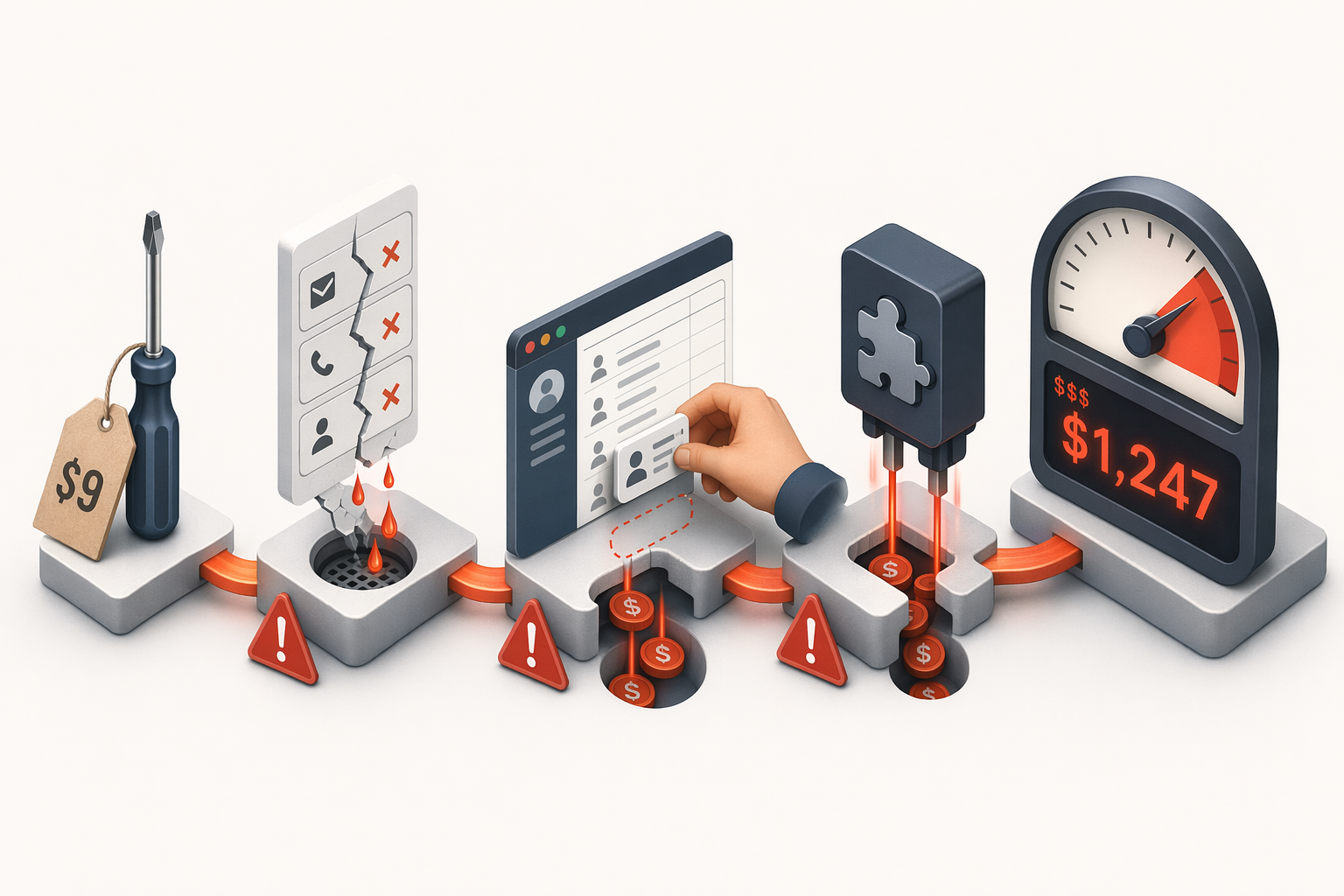
Advertised pricing rarely reflects the true cost of acquiring usable contacts because verification burn rates, workflow friction, and regional accuracy variance inflate effective spend. DataStackGuide notes that LinkedIn Sales Navigator restricts data export, forcing teams to manually copy contacts or pay for third-party extraction tools that add friction to daily workflows.
Verification Burn Rate: The Math Most Tools Hide
Credit-based tools charge per lookup attempt, not per verified result. A tool offering 100 credits at $50 appears to cost $0.50 per contact, but a 65% email match rate means only 65 contacts are usable, raising the true cost to roughly $0.77 each. Phone numbers burn credits faster — Apollo.io charges 8 credits per phone reveal, and Lusha costs 10 credits via web app (5 via API) for phone lookups. Startups chasing mobile numbers face burn rates that double or triple advertised per-contact pricing.
Workflow Friction: Export vs Native Chrome Extension Lookups
Time lost exporting from LinkedIn to verification tools compounds effective cost. Getting contact info from LinkedIn without connection requires using dedicated Chrome extensions or third-party lookup workflows. Native extensions like Kaspr's Chrome plugin let SDRs reveal contacts directly on LinkedIn profiles in one click, while export-first tools force multi-step workflows: export CSV from LinkedIn, upload to platform, wait for enrichment, re-import to CRM. Teams that value time savings over sticker price favor native Chrome extensions despite slightly higher per-contact fees.
Regional Accuracy Variance: Tools Optimized for US/EU vs India
Tools optimized for US and European contacts often deliver lower accuracy in emerging markets. Prospeo's India-specific accuracy testing found rates as low as 70% for some providers, while US-focused databases claim 95%+ email accuracy. Startups targeting Indian B2B buyers pay the same per-credit price but receive fewer usable contacts, making regionally optimized tools more affordable in practice. Hunter.io excels on established mid-market and enterprise companies with consistent email patterns but struggles with small Indian firms using personal email domains.
7 Affordable LinkedIn Contact Discovery Tools Compared
The table below compares seven tools based on verified pricing, free plan limits, email and phone capabilities, Chrome extension availability, and accuracy claims sourced from manufacturer websites and review aggregators as of June 2026.
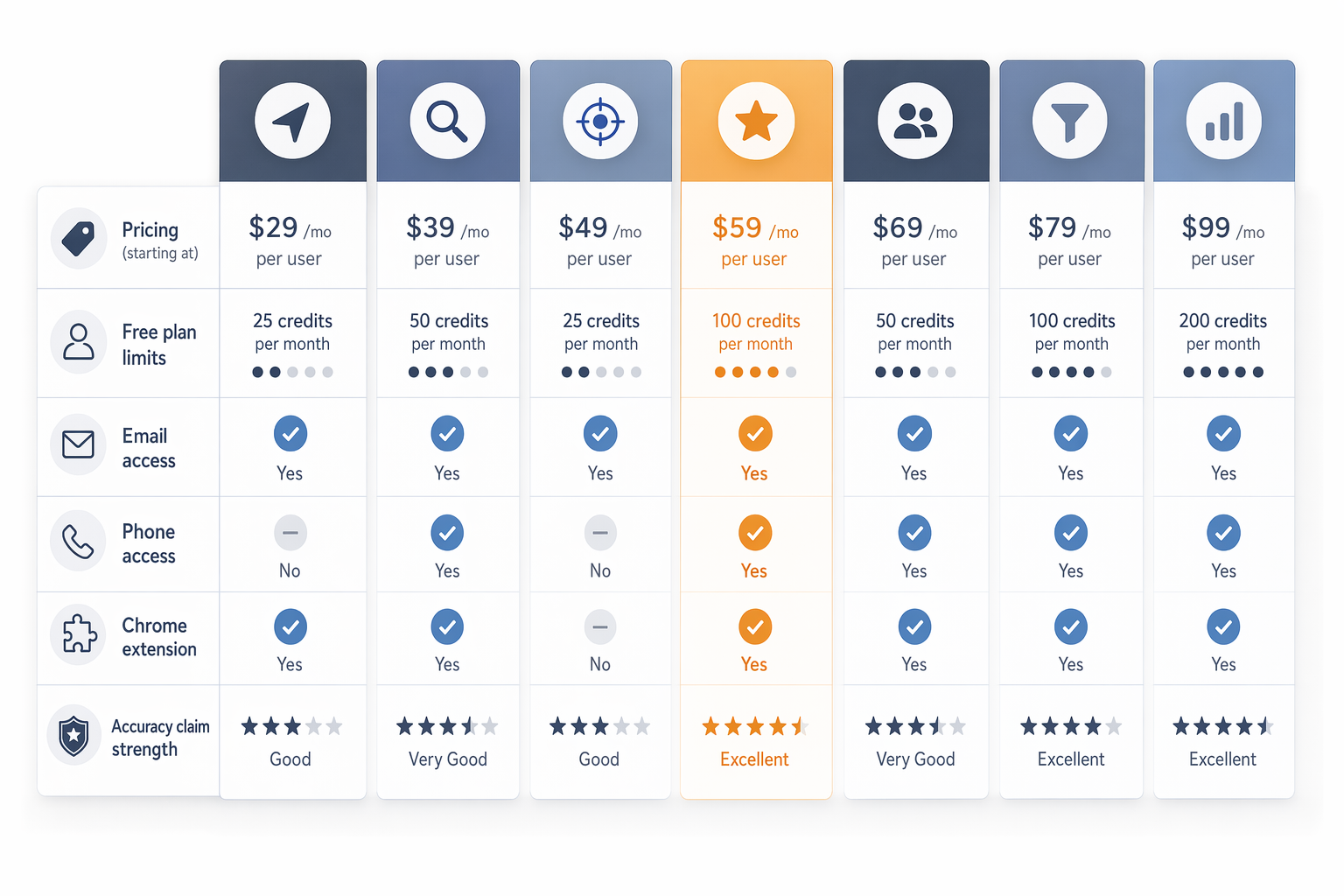
| Tool | Starting Price | Free Plan / Credits | Email Discovery | Phone Discovery | Chrome Extension | Accuracy Claim |
|---|---|---|---|---|---|---|
| PeakAi | ₹675 for 50 contacts | 5 free credits | Verified work emails | Verified phone numbers with mobile classification | Yes — LinkedIn-native | 91% phone accuracy |
| Origami | $29/month | 1,000 credits | Finds contacts traditional databases miss | Not specified | Built-in sequencer | Not specified |
| Hunter.io | $34/month | 25 searches + 50 verifications/month | Domain search, email finding | No phone numbers | Yes — works on LinkedIn | Best-in-class email verification |
| Apollo.io | $49/user/month | 50 credits/month (free); 900 annual credits (free tier) | Email + phone | 8 credits per phone reveal | Yes — one-click enrichment | Accuracy varies by company size |
| Lusha | $37.45/month (annual billing) | 40 credits/month | Fast LinkedIn prospecting | 10 credits per phone (web), 5 credits (API) | Polished Chrome extension | Shallower depth noted |
| Kaspr | $49/month (annual billing) | 15 B2B emails + 5 phone + 5 direct emails/month | Reveals emails from LinkedIn | Reveals direct mobile numbers | Best-in-class LinkedIn Chrome extension | Not specified |
| Snov.io | Pricing not disclosed publicly | Free tier available | Email discovery and verification | Phone enrichment available | Yes | 4.5/5 on G2 |
Data sourced from manufacturer websites and review aggregators as of June 2026.
Best for Pay-Per-Use: PeakAi
PeakAi charges ₹675 for 50 verified contacts, delivering 91% phone accuracy with no monthly subscription lock-in. The Chrome extension works natively on LinkedIn, letting SDRs reveal verified work emails and phone numbers with mobile classification directly from prospect profiles. Startups prospecting intermittently avoid wasting credits on expired monthly allowances, paying only when actively building pipeline. PeakAi is not free — it operates on a pay-per-use model where teams purchase contact credits as needed, distinct from subscription-based platforms that charge recurring monthly fees.
Best for Email-Only Prospecting: Hunter.io
Hunter.io starts at $34/month with 25 searches plus 50 verifications, offering best-in-class email verification for established mid-market and enterprise companies with consistent email patterns. The Chrome extension works directly on LinkedIn profiles for single lookups, while domain search finds all emails at a company in bulk. Hunter.io does not provide phone numbers, making it unsuitable for teams running cold-call campaigns but strong for email-first outreach workflows.
Best for Combined Email and Phone: Apollo.io
Apollo.io provides 900 annual credits on its free tier, then charges $49/user/month for paid plans with built-in sequencer, dialer, and meeting scheduler. Apollo.io targets teams wanting data and outreach in one platform, combining exportable emails and phone numbers with CRM-native workflows. Phone lookups cost 8 credits each, so teams prioritizing mobile prospecting burn credits faster than email-only users. Accuracy varies by company size, with better results for enterprise targets than SMBs.
Best for European B2B Contacts: Kaspr
Kaspr offers 15 B2B emails plus 5 phone numbers plus 5 direct emails per month on its free tier, then charges $49/month annually. Kaspr focuses on European B2B contacts and emphasizes GDPR compliance, running on a credit system owned by Cognism. The Chrome extension reveals direct mobile numbers from LinkedIn profiles instantly, making it ideal for startups prospecting EU decision-makers who require compliant data handling.
Real Cost Analysis: The Math Competitors Hide
Advertised pricing misleads when verification accuracy is below 100%. The table below calculates effective cost per usable contact by dividing sticker price by the platform's stated or tested accuracy rate.

| Tool | Advertised Price | Stated/Tested Accuracy | Effective Cost | Accuracy-Adjusted Value Tier |
|---|---|---|---|---|
| PeakAi | ₹13.50 ($0.16) | 91% | ₹14.84 ($0.18) | High |
| Hunter.io (email-only) | $1.36 per search | 95% (estimated) | $1.43 | High |
| Apollo.io (email) | $0.98 per credit | 75-80% (varies by size) | $1.23-$1.31 | Medium |
| Lusha (phone) | $0.94 per phone credit | 60-65% (estimated) | $1.45-$1.57 | Medium |
| Kaspr (phone) | $0.98 per phone credit | 70% (estimated EU focus) | $1.40 | Medium |
| India-focused provider (tested) | $1.00 per contact | 70% | $1.43 | Low |
Illustrative Analysis: effective cost calculated by dividing advertised price by accuracy rate. Accuracy estimates derived from Prospeo testing and manufacturer claims; actual results vary by target geography and company size.
Startups optimizing for cost-per-usable-contact should prioritize platforms with stated accuracy above 85% or test free tiers to measure real match rates before committing to paid plans. Tools advertising low per-contact pricing but delivering 65% accuracy force teams to buy 35% more credits to reach the same volume of verified contacts.
How to Choose Based on Your Startup Stage and Volume
Startup stage and prospecting volume determine whether pay-per-use, free tiers, or monthly subscriptions deliver better unit economics.

Pre-Seed and Bootstrapped: Free Tiers and Pay-Per-Use
Founders doing hands-on prospecting before product-market fit should maximize free tier credits before committing to paid plans. Apollo.io's 900 annual credits and Hunter.io's 25 searches per month cover early-stage validation outreach without upfront cost. Pay-per-use tools work well when prospecting pauses during product development sprints, avoiding the waste of monthly seat fees during inactive periods. Teams discovering fewer than 50 new contacts per month benefit from credits that roll over or don't expire.
Seed Stage: Low Monthly Subscriptions With Rollover Credits
Startups hiring their first SDR need platforms priced under $50/month with enough monthly credits to support 100-200 new contacts discovered per rep. Origami's $29/month tier with 1,000 credits and Hunter.io's $34/month plan balance affordability with sufficient volume for early outbound motion. Rollover policies become critical, teams running intermittent campaigns during fundraising or product launches preserve unused credits instead of losing value to monthly expiration.
Series A and Beyond: Multi-Seat Plans With CRM Integration
Sales teams with 3+ reps benefit from platforms offering native CRM sync, bulk enrichment, and per-seat pricing that scales predictably. Apollo.io's $49/user/month includes built-in sequencer and dialer, consolidating contact discovery and outreach into one workflow. Sales prospecting tools should cover discovery to conversion in unified platforms as teams mature. Startups at this stage optimize for rep productivity rather than minimum per-contact cost, justifying higher monthly spend to reduce workflow friction.
When to Upgrade From Free Tiers to Paid Plans
Free tiers become bottlenecks when prospecting volume exceeds monthly credit limits or when phone number access becomes critical for outbound velocity.

When Daily Lookup Limits Block Pipeline Growth
Free plans cap lookups at 5-10 contacts per day or 25-50 per month, forcing SDRs to ration discoveries across the month. LinkedIn restricts automation to 30-50 profile visits per day to prevent spam, so even paid tools can't exceed safe daily limits. Teams hitting free-tier caps three weeks into the month should upgrade to plans offering 500+ monthly credits, letting reps front-load prospecting early in the quarter without artificial throttling.
When Phone Numbers Become Key for Conversion
Email-only free tiers suffice for top-of-funnel awareness campaigns, but closing deals often requires phone follow-up. Hunter.io provides no phone numbers, and Apollo.io's free tier limits phone reveals to 5 mobile credits per month. Startups running cold-call campaigns need tools offering 50+ phone lookups monthly, justifying upgrades to Lusha's $37.45/month plan or Kaspr's $49/month tier. Phone accuracy matters more than email accuracy for conversion, so platforms claiming 85%+ mobile match rates reduce wasted dials.
When Workflow Friction Costs More Than Tool Upgrades
Time lost switching between LinkedIn, enrichment platforms, and CRM costs more than tool subscriptions once teams hire full-time SDRs. Native Chrome extensions eliminate copy-paste workflows, and built-in CRM sync removes manual CSV imports. Startups paying SDRs $4,000+ per month should prioritize tools that save 30+ minutes daily over tools saving $20 monthly on subscription fees. According to Salesforce [2], 67% of sales reps don't expect to hit quota, and busywork reduction directly improves conversion rates.
Frequently Asked Questions
What are the most affordable LinkedIn contact discovery tools for startups?
The most affordable tools prioritize pay-per-use or low monthly subscriptions under $50, with PeakAi charging ₹675 for 50 verified contacts, Hunter.io starting at $34/month for email-only discovery, and Apollo.io offering 900 annual free credits then $49/user/month for combined email and phone lookups. Real affordability depends on verification accuracy and credit rollover policies rather than sticker price alone.
How can I automate LinkedIn contact research without getting restricted?
LinkedIn restricts automation to 30-50 profile visits per day to prevent spam, so cloud-based tools that mimic human-like behavior reduce detection risks. AI-powered personalization in tools like Quicklead.io helps stay within safe daily limits of 30-40 actions, while manual prospecting through Chrome extensions avoids violating LinkedIn's Terms of Service that ban automated scraping.
Why can't I find contact info for 70% of LinkedIn profiles?
Only 5-10% of LinkedIn users share phone numbers with first-degree connections, and LinkedIn restricts third-party data access to prevent scraping. Tools pull contact data from external databases rather than LinkedIn directly, so match rates depend on whether prospects appear in the tool's data sources. Email discovery achieves 75-80% match rates, while phone accuracy ranges from 50-65% across credit-based models.
Do LinkedIn contact discovery tools charge per lookup or per verified result?
Most tools charge per lookup attempt, not per verified result, meaning a 70% email match rate inflates effective cost-per-contact by 43% above advertised pricing. Apollo.io charges 8 credits per phone reveal regardless of whether the number is valid, while PeakAi's pay-per-use model charges only for verified contacts delivered, reducing waste from failed lookups.
What's the difference between email-only and email-plus-phone tools?
Email-only tools like Hunter.io focus on domain search and email verification, starting at $34/month but providing no phone numbers for cold-call campaigns. Email-plus-phone tools like Apollo.io and Lusha reveal mobile numbers but charge 5-10 credits per phone lookup versus 1 credit for emails, making phone discovery 5-10x more expensive per contact.
How do credit rollover policies affect startup affordability?
Monthly credit expiration forces startups to rush lookups or lose value, penalizing teams with intermittent prospecting during fundraising or product development sprints. Rollover policies let credits accumulate across months, preserving value for early-stage teams that pause outreach. Apollo.io offers 900 annual credits with implicit within-year rollover, while Lusha's 40 monthly credits expire at month-end.
When should startups upgrade from free tiers to paid plans?
Upgrade when daily lookup limits block pipeline growth (free tiers cap at 5-10 contacts/day), when phone numbers become key for conversion (free plans limit phone reveals to 5/month), or when workflow friction costs more than tool subscriptions once full-time SDRs are hired.
Sources
- How to Get LinkedIn Contact Info Without Connecting (2026) - generect.com (2026)
- 5 Best Sales Prospecting Tools & Software in 2026 - salesforce.com (2026)